

Dear friends,
Over the summer, I tried out ghost hunting. Armed with dowsing rods and a radio set to scan through frequencies, I and my classmates at Katherine Guinness’s GHOST HUNTING seminar circled up and listened for signs of the supernatural in the SoRA sanctuary. We took turns asking questions aloud to our invisible friends. We scoured for audible fragments of speech from the airwaves. We attempted to interpret the movement of the rods as “yes” or “no.” Above all, we suspended doubt.
The act of ghost hunting (or, if you prefer, the more gentle practice of ghost noticing) asks us to move past our routine modes of communication. To see who might exist beyond our plane of perception, we first have to tune ourselves to the ways by which beings might otherwise make themselves known. In our seminar debrief, one student mentioned feeling a simple intuition that a guest might be with us. Most of us nodded in agreement. Arriving at this feeling didn’t require the specialty devices, but it did require the tuning of our attention to presence.
In this issue, we are attending to the GHOSTS among us. In Visions of Attention, Haena meditates on the Estonian folkloric myth of kratts. From the archive, we resurface a conversation with Cam Cassar on the role of martyrs in living movements. In Stuff for Study, I share further readings on hauntology and the “ghost realm” of images.
In personal news, I’ll be leaving my post at The Empty Cup and handing it off to our new Managing Editor, Jael Goldfine. It’s been a pleasure studying with you!
Hauntingly yours,
Czarina Ramos
Managing Editor
Visions of Attention
An archive of images and mini-essays on the myriad modes of attention
Machine in the Ghost

Before Roombas and AI chatbots, there were kratid (singular: kratt): supernatural servants built from old household tools and hay and animated by three drops of blood. According to Estonian folktales, a kratt becomes unconditionally yours to do chores and even steal gold from your neighbors. But there’s a twist: if a kratt is not constantly given work to do, it will turn against its owner.
Some illustrations place kratid in anthropomorphic bodies, but in the Estonian film November (2017, dir. Rainer Sarnet) they are hauntingly nonhuman. The film opens with a three-legged — if it can be called that — kratt stealing a cow and hurtling across the sky, its blades rattling like a helicopter’s. A Freudian reading would attribute the creature’s uncanniness to inanimate tools taking on lifelike qualities.
What accentuates the eeriness of kratid is the absence of defined purpose or specialized function. A kratt does not work towards a desired end, nor to earn reward, nor for satisfaction. They are assembled from whatever household junk one can find, and without a clear instrumental design, might as well be used as a chair or stepladder — which an old farmer does in a later scene. In this sense, a kratt is not exactly a machine, although it isn’t human, either. It’s the fixation on work for work’s sake that makes the figure of the kratt so deeply strange.
Estonian lawmakers are now referring to artificial intelligence as “kratt” and nicknaming their AI legislation the “kratt law.” Will the future of AI follow the cautionary tale of the kratid? Time will tell. But we’re reminded, in this unsettling resemblance, of the existential unease that arises when labor is divorced from human relation.
— Haena Chu
From the Cup
Archived essays from our community of thinkers
How the Dead Live On


“When we attend to the memory of our martyr, we live with that grief and we get enraged by their death — but is rage not rooted in love? The love for the fallen is the material that we use to build this world. We say: the power that they took from you when they took your life is power I’m redirecting to build a new world.”
—“On Martyrs and Movements” with Cam Cassar
Stuff for Study: Ghost Notes
Readings and other resources for continued learning on attention and politics
Praise song for the kitchen ghosts — Crystal Wilkinson for Emergence Magazine
Haunting, blackness, and algorithmic thought — Ezekiel Dixon-Roman and Ramon Amaro for e-flux
The ghost realm of images — Rachel Ossip for n+1
AI wrote about my dead sister — Vauhini Vara for Believer Magazine
Hauntology, or a nostalgia for lost futures — BBC Archive
— Czarina Ramos
IRL
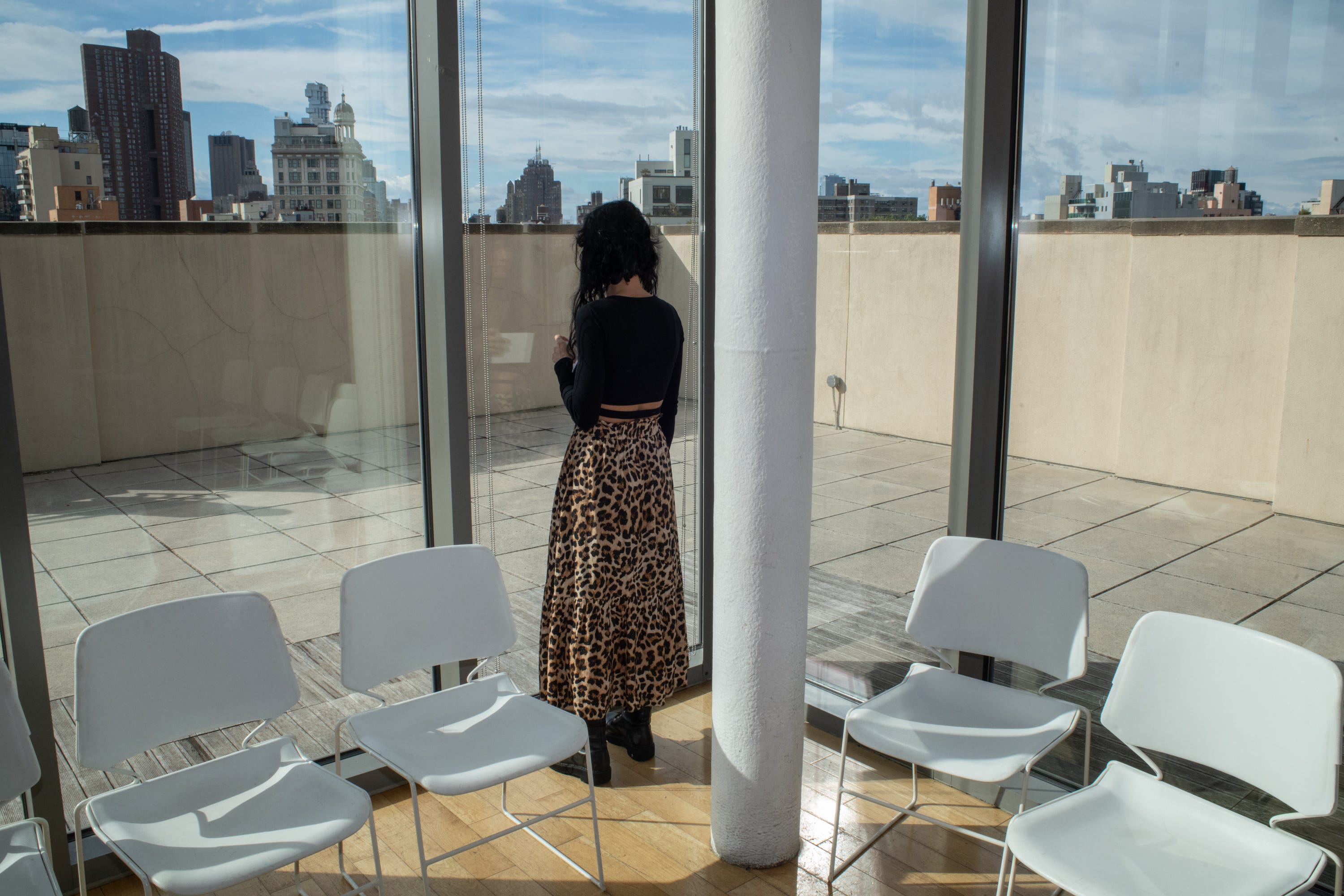
Tue, November 3: In this ATTENTION LAB: GHOSTS, we’ll attend to immaterial or transient phenomena as they document their own erasure, disappearance, and absence. Sign up HERE!
Thu, November 5: Join us for the opening reception and performance celebrating HAUNTED BY LIGHT, a group exhibition of photoreactive media that draw attention to forms of light as they delineate the limits of our vision and visibility. RSVP HERE.
Find more workshops, events, and gatherings HERE!