

Friends!
In case you haven’t heard, a short-spined raccoon in Seattle has scampered into the hearts of humans worldwide. Seattleite Kiana Hall uploaded footage of the round-statured creature, initially mistaken for a cat, and bestowed the name Jimothy on the animal (he “just looked like a Jimothy to me,” Hall declared). Among locals, Jimothy has inspired murals and tattoos, with a city councilmember declaring the season “Jimothy Summer.” Internet users are propagating images and videos of Jimothy alongside wholesome, hopeful messages, heralding the raccoon as an icon of disability and authentic living.
Jimothy joins a long lineage of beloved celebrity animals, including Moo Deng, Punch the Monkey, and Flaco the Central Park Owl. Even before the days of viral internet hype, animals were launched into fame as the faces of film, sports, and consumer brands. As with humans, animal fame can be short-lived – and oftentimes detrimental to the celebrity in question. Local wildlife experts have voiced concern over excessive attention to, and interference with, Jimothy’s habits, urging Jimothy-watchers to keep a safe distance. Some concerned observers have even urged authorities to capture Jimothy and place the raccoon in a zoo to protect him from human harm.
Can our short-spanned critter crazes be nurtured towards longer commitments of care? This is the idea of “making kin,” as biologist and feminist scholar Donna Haraway writes: “By kin I mean those who have an enduring mutual, obligatory, non-optional, you-can’t-just-cast-that-away-when-it-gets-inconvenient, enduring relatedness that carries consequences. I have a cousin, the cousin has me; I have a dog, a dog has me.” How might our affection towards the Jimothies on our screen transform our ways of inhabiting our shared home?
In this issue, we’re turning our attention to kinship. In Visions of Attention, Haena studies the human-horse bonds of Siberia’s Pazyryk tribe. In From the Cup, artist-researcher kyle barnes reconsiders our disgust towards vermin. In Stuff for Study, I share artist Jenny Odell’s practice of seeing with soft eyes and philosopher Jane Bennett’s attribution of life to the inanimate. And in IRL, we highlight SoRA’s next seminar, where we’ll practice kinship with… GHOSTS!
Read on!
Relationally yours,
Czarina Ramos
Managing Editor
Visions of Attention
An archive of images and mini-essays on the myriad modes of attention
Hold Your Horses Close
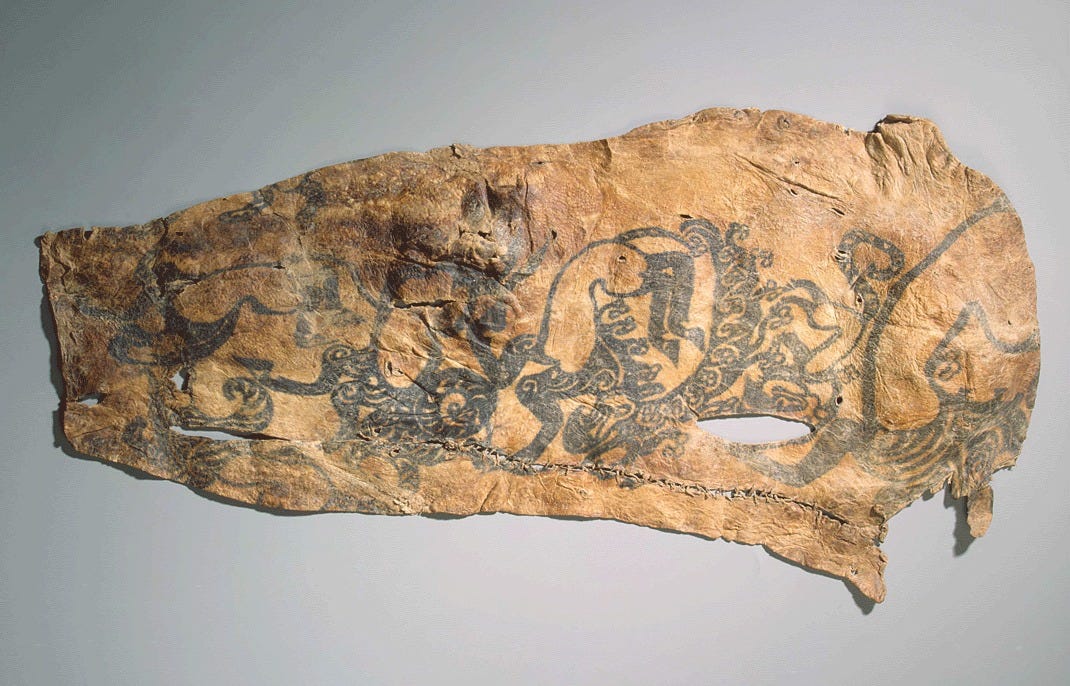
A tribe that inhabited the Altai Mountains of Siberia, the Pazyryks maintained a lifelong bond to horses that was crucial to their nomadic lifestyle and trading — so much that horses are found on tattooed mummies dated to the Iron Age (6th to 3rd centuries BC). This may be surprising considering that they almost never revealed skin in public. As something literally inked into the skin, these elaborate designs suggest the relationships that can be created through embodied attention even when they are not intended to be appreciated in public: the vulnerable ritual of receiving the tattoo, new attitudes and beliefs that it imbues on the individual, and its intentional preservation long after other body parts have disintegrated.
In “Inked: Human-Horse Apprenticeship, Tattoos, and Time in the Pazyryk World,” Gala Argent emphasizes that horse riding was seen as an apprenticeship in learning the language of horses, and experienced horses continue to be seen in Eurasian equestrianism as “schoolmasters” that bring their individualized techniques to train riders. As horses and humans grow together, horses also become a measure of time and mark the milestone events of a person’s life. While the mutual human-horse bond was shared by the community overall, tattoos mark skin, or the very “interface” between individual bodies and the world, drawing attention to the connection between personal interspecies bonds and larger symbolic, cosmological systems.
— Haena Chu
From the Cup
Archived essays from our community of thinkers
Consider the Vermin
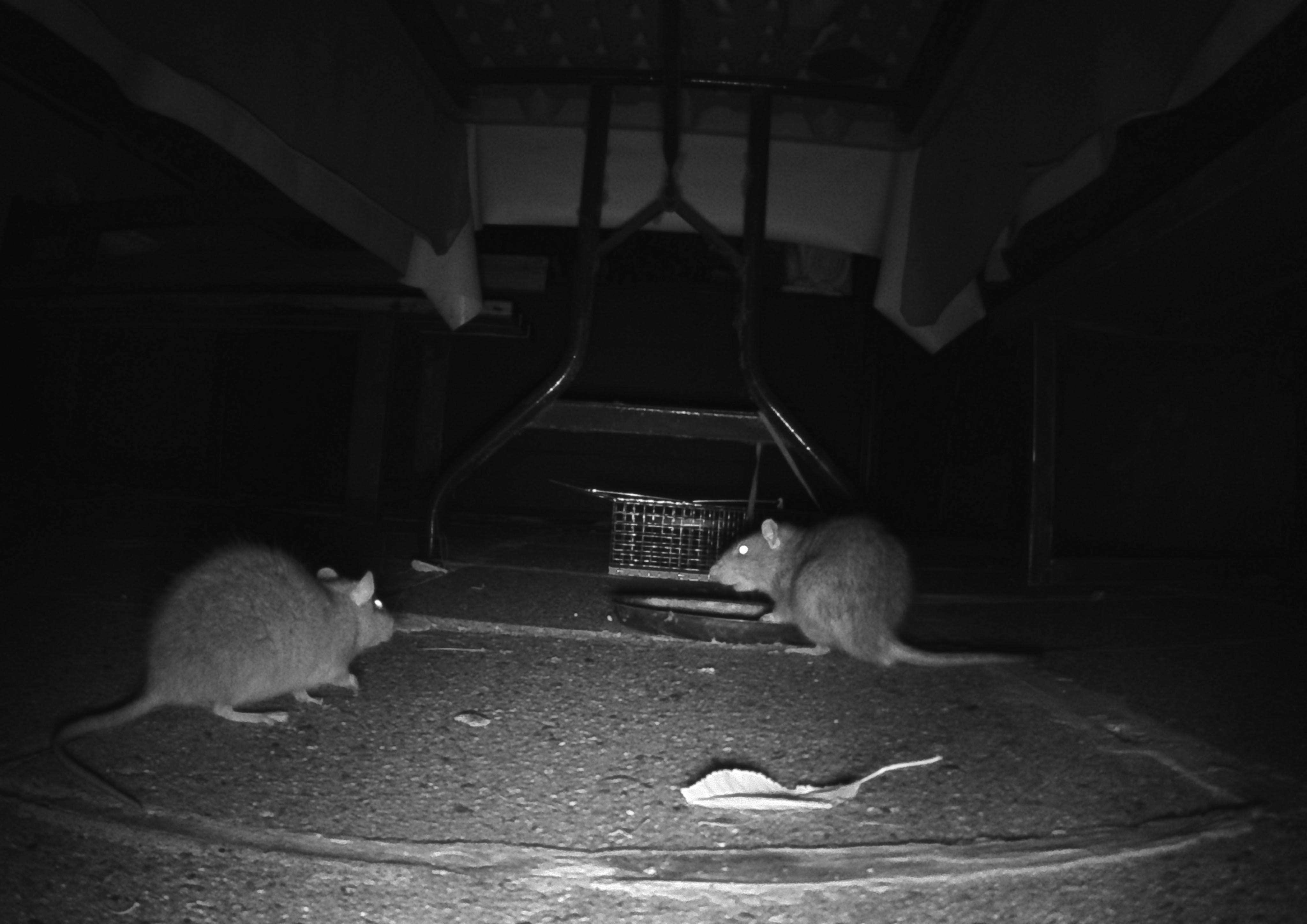
“In a time where our attention is bought and sold, the beings that evoke our disgust make for compelling foils to the gleaming digital surfaces engineered to canalize our most visceral desires. The disgusting creature or object confronts us with its impurity, driving us to rid ourselves of the disgusting thing. In this way, disgust walls us off from curiosity, connection, and understanding.
A different relationship to vermin is possible. In exploring it, we might also find the beginnings of a new relationship to urban ecology, to the city as a whole, and even to our own attention.”
— “Why study disgust?” by artist-researcher kyle barnes
Stuff for Study: Proof of Kinship
Readings and other resources for continued learning on attention and politics
A little more than kin — Richard Powers for Emergence Magazine
Living within contaminated homelands — Lillian Pearce for Aeon
The philosopher who believes in living things — Morgan Meis for the New Yorker
Seeing with soft eyes — Jenny Odell for Longreads
The nuclear family: how a complex became a norm — Brian Connolly for Parapraxis
— Czarina Ramos
IRL
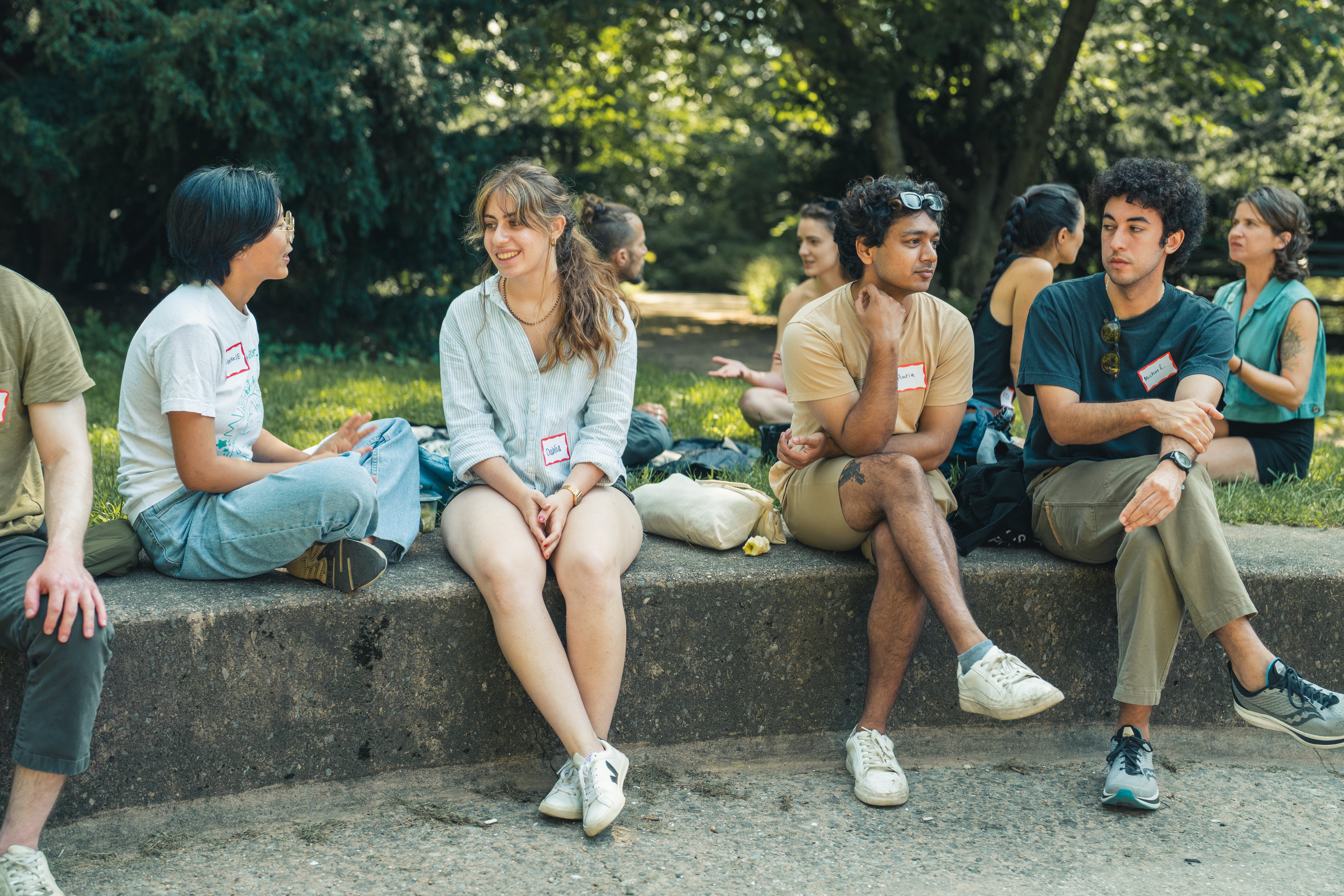
Mon, August 3rd: Join us for our IRL seminar GHOST HUNTING, where we will read, experiment, and create our own instruments for detecting the paranormal. Enroll HERE!
Wed, August 5th: ATTENTION LAB: SANCTUARY is a participatory workshop dedicated to the joint exploration of radical human attention. Sign up HERE!
Find more workshops, events, and gatherings HERE!