

Friends!
Have you ever played the game GeoGuessr? The idea is that you’re dropped into Google Street View somewhere in the world, and you have to pinpoint your corresponding location on a map. While some (myself included) perform strongly only with the help of extremely obvious clues (Oh, well there’s the Eiffel Tower), others can glance at a patch of dirt in black and white and, with certainty, state, “Looks like your standard New Zealand.”
GeoGuessing is a delightful practice of attention to place. As one advances in the level of difficulty, the easy hints begin to disappear. Every mundane detail is a focal point: I am considering the painted lines on the road, and I am attempting to glean information from the sign of a hair salon. The minutiae become features of the geography, informing me of place much like the identification of a native species might.
I at first was attracted to the idea that GeoGuessing might provide me with a wanderlust fix, or at the very least point me to potential future destinations. Instead, the game presents an alternative mode of travel. Unlike most vacations in which an itinerary is formed around what we already know to be significant, GeoGuessing presents a reversal: with no prior information, we arrive, we look around, and we ask, “What makes this place what it is?”
This issue of The Empty Cup is about geographies. How do places orient our attention? How does attention transform when we shift the scope of our geography? In Visions of Attention, Eleanor considers the significance of viewing the Earth from outer space. In Practice in Practice, kyle thinks about what characteristics of a place we consider interesting. And in Stuff for Study, I share stories on black hole mapping and the entanglements of cartography and citizenship.
Read on!
Spatially yours,
Czarina Ramos
Managing Editor
Visions of Attention
An archive of images and mini-essays on the myriad modes of attention
Awakening from Outer Space
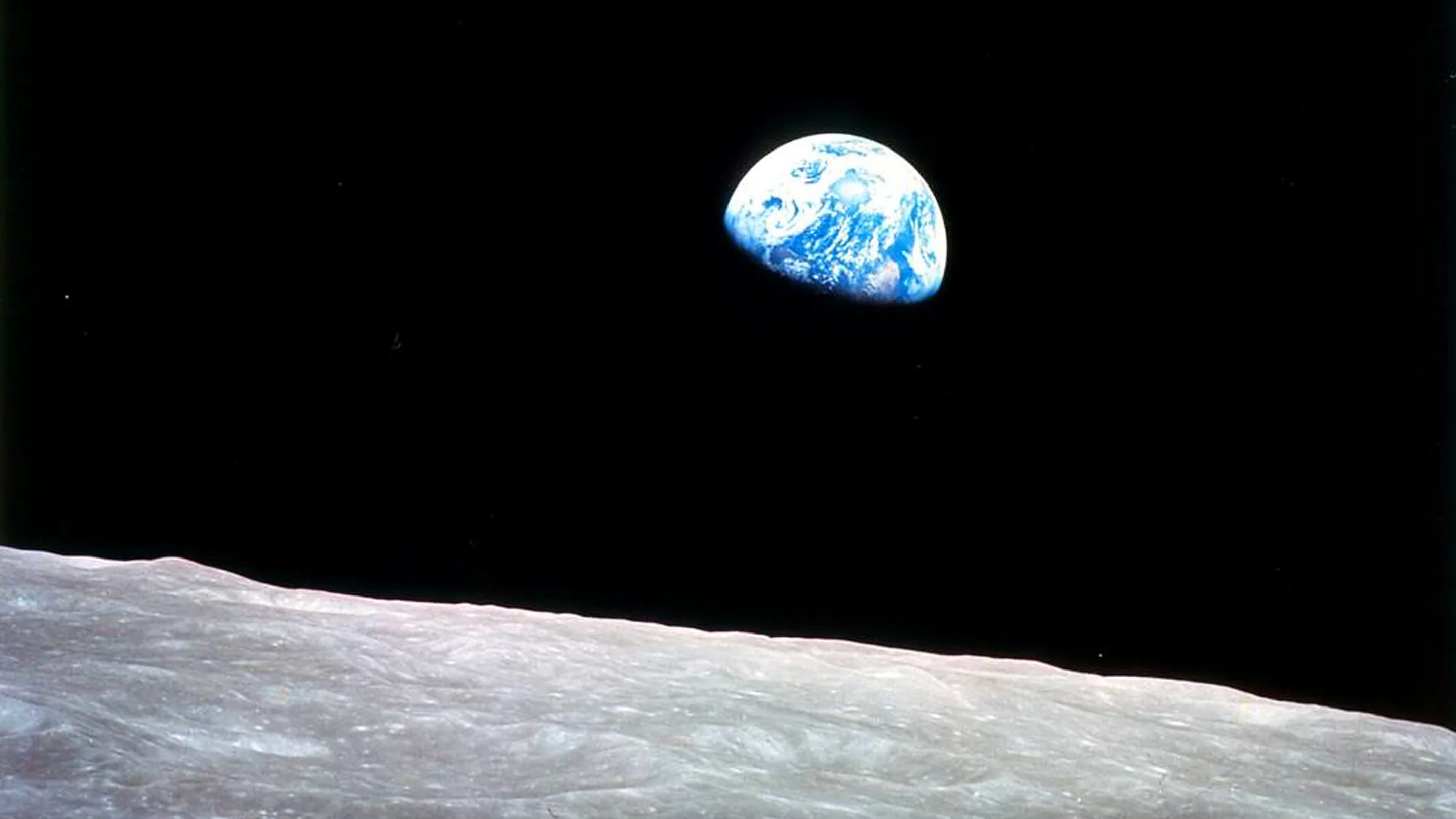
Few images have shifted the frame of human perspective as profoundly as Earthrise. Taken by astronaut William Anders on December 24, 1968, this photograph captures Earth not as a backdrop to the human drama, but as a self-contained, fragile presence floating in the vast, mysterious cosmos.
While other images of Earth had circulated prior to Anders’ photograph, none had been seen through human eyes from space; here was one of our own, blasted into the great unknown, rebroadcasting our home back to us from far beyond its edges. For the first time, the planet was witnessed not simply as “ours,” but as a being in its own right – delicate, finite, and whole.
This sudden confrontation with the foundational-yet-previously-unveiled mirrored the seismic shifts in social consciousness of the era. The late 1960s – marked by political upheaval, cultural revolution, and an increasingly mainstream social/ecological awareness – saw Earthrise emerge as an emblem of an “awakening” humankind. Framed by the Civil Rights and anti-war movements, it fueled the environmental movement that, less than 18 months later, led to the first Earth Day in 1970.
Attention and meaning are deeply entangled, part of the reciprocal dynamics that illuminate our singular (and shared) existence. Earthrise symbolized a tectonic shift of what it is to be human for an entire generation. Widening the scope of our vision meant renegotiating our place as one species among many, interwoven with the rhythms of this earthly abode, with one another, and with the many expressions of life’s unfolding across time and space.
Practice in Practice
Reflections on experiments in Attention Activism
To Behold the Manhole
.jpg)
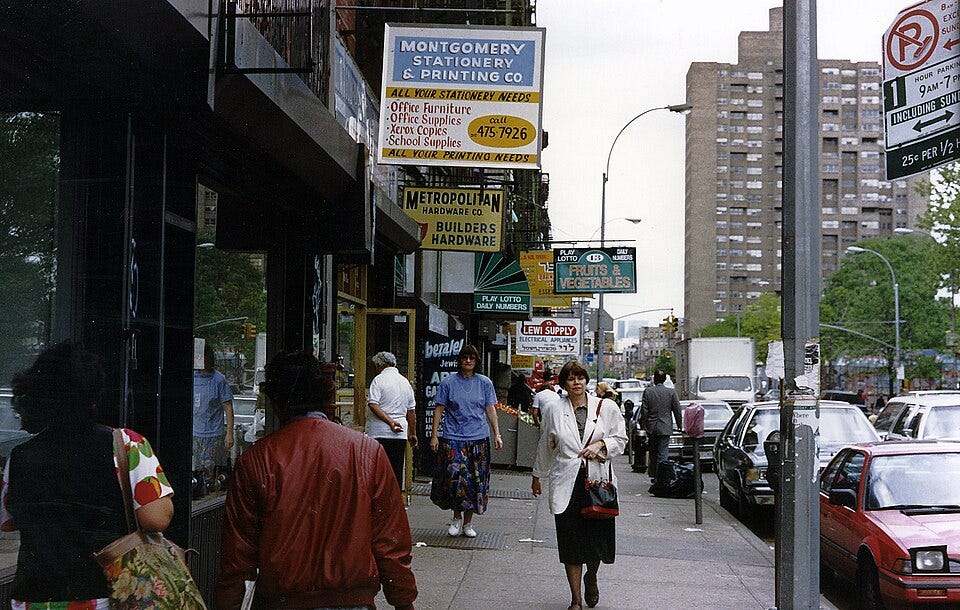
Lately, I’ve been obsessed with manhole covers. It started with a deep dive into internet infrastructure for an essay — fiber optic cables, data centers, the hidden nervous system of the city. But now I can’t stop stopping in the street. These overlooked artifacts of urban infrastructure have become, for me, the definition of interesting. Which is such an interesting word, isn’t it? Interesting.
In her 2012 work of cultural theory, Our Aesthetic Categories: Zany, Cute, Interesting, scholar Sianne Ngai attempts to excavate what we really mean when we reach for that word – and why we reach for it so relentlessly. It’s a kind of attention activism, her project: turning our gaze toward that which directs our gaze. Because interesting, for Ngai, signals that something is worth attending to. But it stops short of telling us why. It forestalls the deeper aesthetic judgment – is it interesting because it’s terrible? Sublime? Merely strange? – and instead makes a demand of us. It asks us to justify ourselves, to follow the thread, to keep looking.
So why is a manhole cover “interesting”? Perhaps, because it speaks in an esoteric language to a hidden layer of the city, right beneath our feet. Because it holds a little-told history of how our city breathes and circulates and holds itself together. Because it is a vehicle for studying how we live – together, in public, in passing.
Which is exactly what we did on March 22nd in a Sidewalk Study in the Lower East Side. The Lower East Side has its strange convergences: trust fund kids and vintage stores priced for the one percent, the whole performance of a neighborhood that has been many things to many people. But it also has manhole covers, and graffiti, and overturned tree stumps, and people from every walk of life moving through the same block without knowing each other’s names. What our study kept returning to was this: for us, the interesting things about the Lower East Side – the genuinely interesting things – are its more mundane textures. The parts that don’t make it into the branding. So for all the attention and capital flowing toward the scenes that converge here, perhaps the most remarkable thing of all is what’s left when you stop looking at the spectacle — the small, unglamorous infrastructure of a place: the bolts and drains and root-buckled sidewalks that hold everything up, quietly, without asking to be noticed. The city’s hidden grammar. The layer that was always there, waiting for you to stop and attend.
Stuff for Study: Schools of Thought
Readings and other resources for continued learning on attention and politics
Cartographies of consciousness: mapping relational worlds — Queenie Wu for The Empty Cup
Charting the edges of the known world — Surekha Davies for Aeon
Map-making is in the hands of Big Tech; so is your citizenship — Hasi Jain for The Swaddle
Journey from “the center of the world” — Zoé Samudzi for The Funambulist
Experimental geography: radical approaches to landscape, cartography, and urbanism — Nato Thompson
Radical Cartography — an archival project by Bill Rankin
— Czarina Ramos
IRL
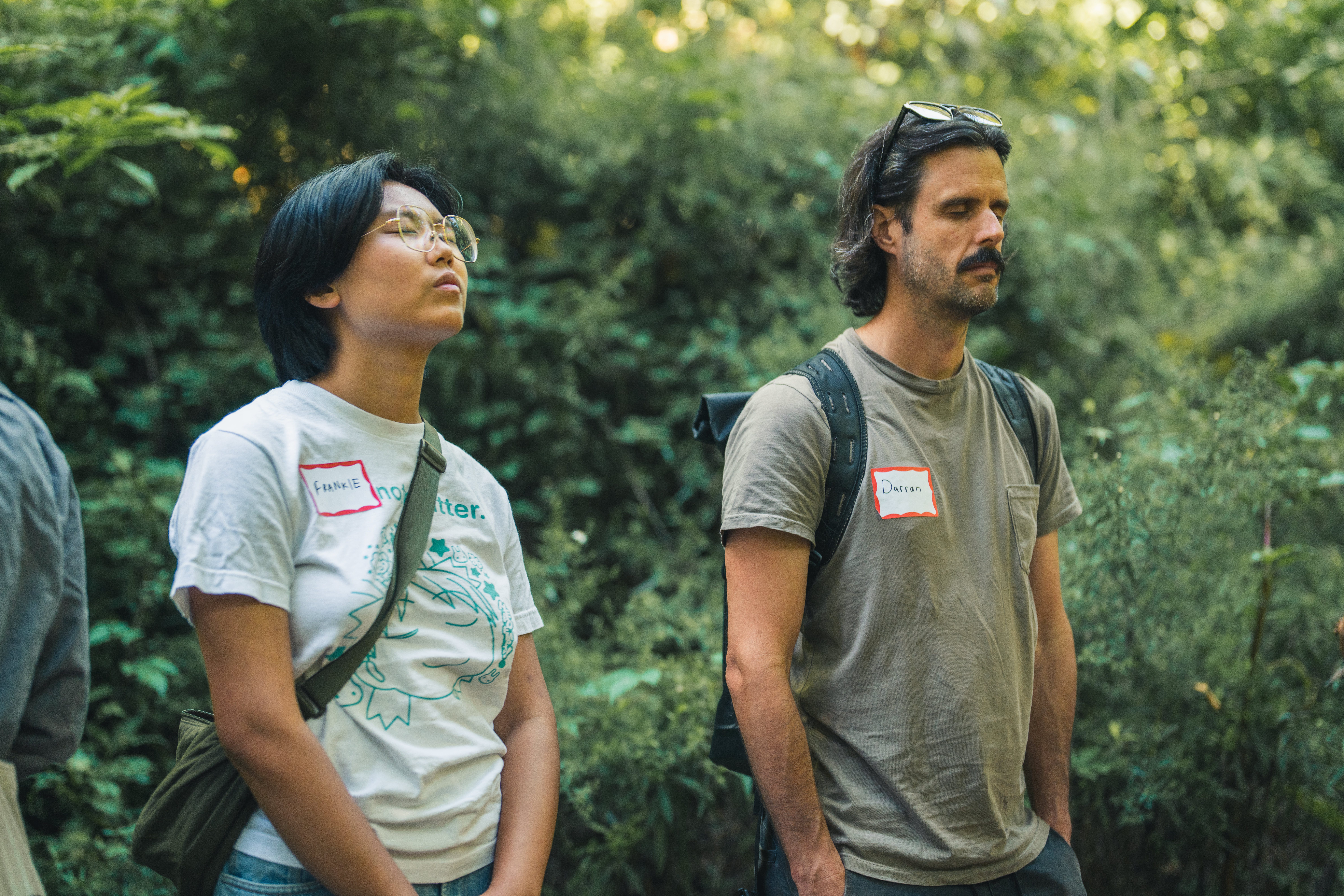
Wed, April 8th: Join us for our IRL seminar DOCUMENTING THE DISAPPEARED, where we will discuss what it means to give our attention to someone or something we are told not to see. Enroll HERE!
Thu, April 9th: Join us for the opening reception of IDEA, SCORE, PROCESS, OBJECT in our Sanctuary Gallery. RSVP HERE!
Tue, March 31st - Sat, April 25th: We are in residency at the National Academy of Design‘s FUTURE SCHOOLS exhibition in Chelsea. For this full month, we will organize practices of attention inspired by a pantheon of pedagogical thinkers and special events such as panel talks on the agenda of art and attention. Find the full schedule and RSVP HERE!
Find more workshops, events, and gatherings here!