

Friends!
I recently wrapped up another section of Attention Activism 101, our introductory course at the School of Radical Attention. For three weeks, we gathered at the National Academy of Design and discussed readings on the topics of the attention economy, the notion of ecologies of attention, and attention activism.
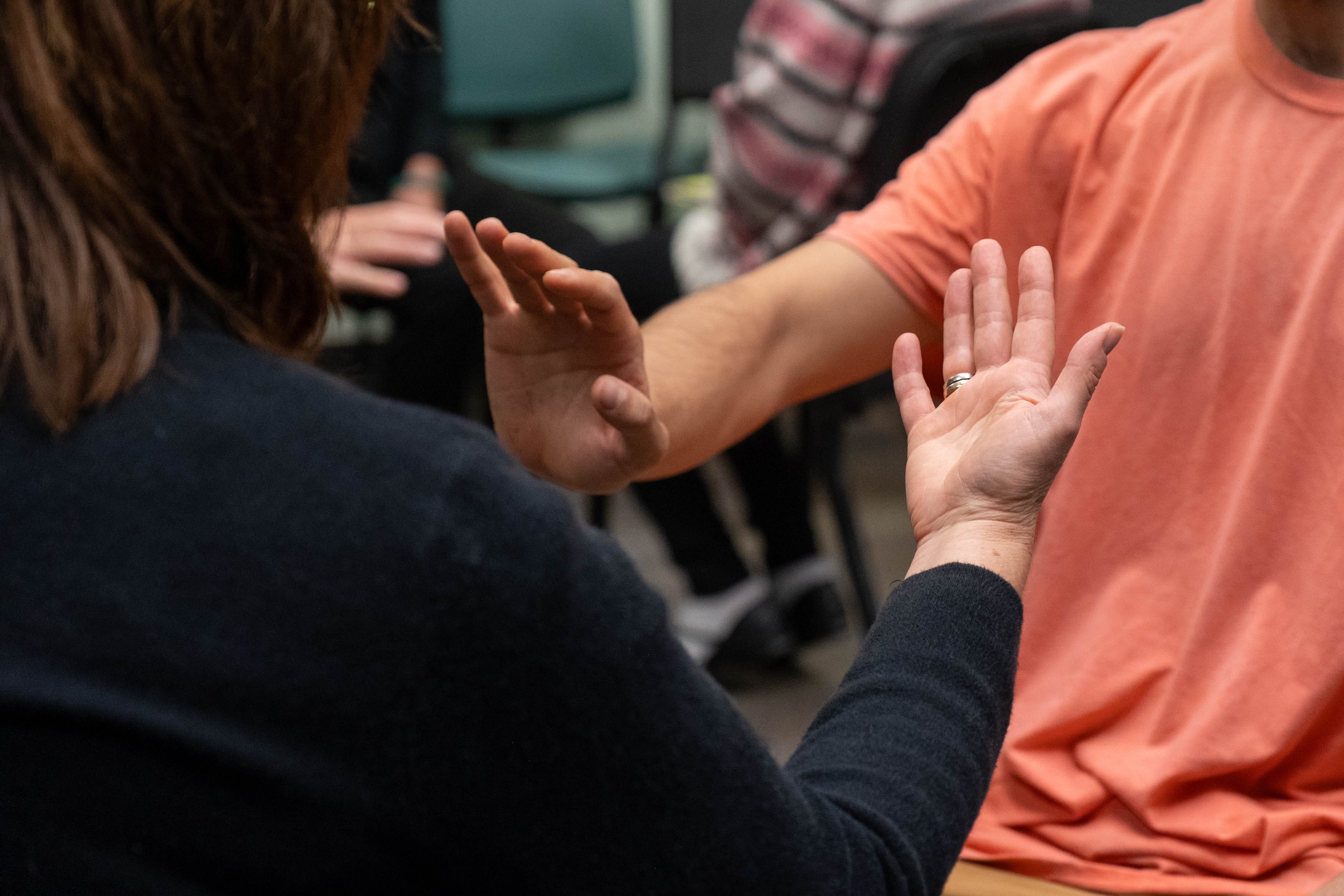
To begin the last class, we performed an attention practice inspired by Langston Hughes’s Freedom’s Plow, in which participants attended to their hands and the hands of a partner. As she scanned the practice instructions, a student remarked that she’d been thinking lately about the particular humanness of hands – these appendages of gesture and action.
Thinking about our hands seems particularly timely as we grapple with the increasing encroachment of artificial intelligence on the human endeavor of art. As artists and craftspeople protest for labor protections against AI use in their industries, they affirm a communal value: that making and doing are acts worth preserving. That, as my student suggested in her reflection, we extend our humanity into our shared world through the work of our hands.
In this issue, we attend to CRAFT. How does the act of making things direct attention to our humanity? What attentional magic emerges through pen and paper, or brush and canvas, or thread and fabric? In Visions of Attention, Eleanor surfaces the traditions of Balinese dance. In Practice in Practice, Richard and Marcela attend to the body as a temple and amusement park in a reading of Anthony Bourdain’s Kitchen Confidential. And in Stuff for Study, I share writer Garth Greenwell’s reflections on the intertwined art and life of Ruth Asawa, plus a coder’s meditation on the waning days of craft.
Read on!
Manually yours,
Czarina Ramos
Managing Editor
Visions of Attention
An archive of images and mini-essays on the myriad modes of attention
The Mask That Materializes

From the sacred Wali ceremonies to the solitary Topeng Pajegan and the ensemble Topeng Panca, Balinese dance spans a wide spectrum of ritual and entertainment. Yet one theme remains near-constant: the devotional creation of the mask, or in Balinese/Kawi, the tapel. Carved by hand (often from the sacred pule tree) and imbued through ceremony with spirit and intention, each mask becomes a vessel for the non-human being it represents.
The process of crafting a tapel is as much spiritual as it is technical. Artists, many of whom have been crafting these masks for decades, undergo purification rituals and periods of meditation, aligning their own attention with the character they intend to invite into form. The mask is not a prop but an active participant, a channel through which archetypes move and speak. It is not uncommon for dancers to sleep with the mask by their bedside to deepen their understanding of its essence.
Above, behold Topeng Tua: the Old Man. With his deeply lined face and the slow, considered movement he summons, he embodies memory, wisdom, and the inevitability of aging. To dance Topeng Tua is to enter a different rhythm of time in which practices of reflection, humility, and reverence materialized in the mask shape every moment and guide every movement.
Here, attention is bodied forth in ways that transcend the usual delineations between senses. The dancer listens with more than ears, feels with more than skin – the mask trains the body to perceive in new dimensions, to become both vessel and witness. From the creation of the tapel to the performance itself, attention is a sacred medium, a bridge between intelligences that flow in ways both seen and unseen.
Practice in Practice
Reflections on experiments in Attention Activism
The Body Delighted
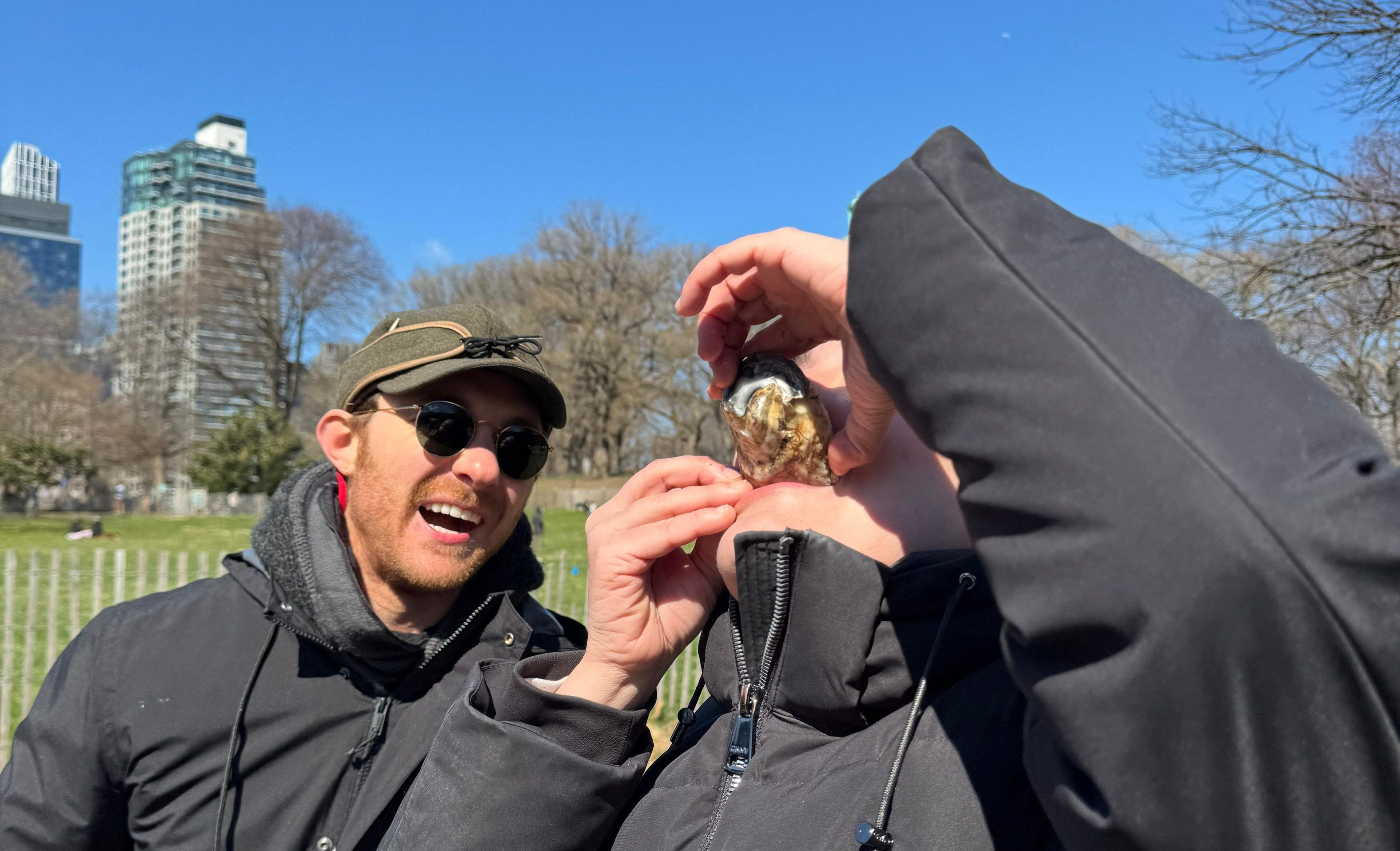
Perhaps no contemporary writer embodied reckless commitment to gustatory pleasure as fully as Anthony Bourdain. He was an attention activist without knowing it. His writings on taste offer a starkly different ethos than the attention economy’s “foodie” culture. Where Bourdain calls on us to slurp oysters that taste of seawater, TikTok and Instagram offer images of food so perfectly lit we’ve forgotten it’s supposed to end up in your mouth(and maybe on your face, too). How has technology changed our experience of food? And how can we eat with our full attention, in the messy, joyful way Bourdain describes?
On a brisk and bright day in late March a group of strangers gathered at Fort Greene Park in Brooklyn to explore these questions. We met up by the Prison Ship Martyrs Monument and started out with a physical warmup which caught the attention of a woman arriving for a Tai Chi session nearby. She joined our group as we began to read an excerpt from Bourdain’s Kitchen Confidential. Then we gave people an attention practice inspired by the text: spend twenty minutes attending to the farmer’s first as if your body were a temple, then as if it were an amusement park. Richard, in amusement park mode, bought some oysters and focaccia bread to share. Folks departed, wandered the market, tested both modes of attention (to their body, to the possibilities of the wares), and, in some cases, gave into temptation.
Upon regrouping on a sunny bench to debrief, we shucked a few oysters to open the conversation. We discussed our experience of the practice and gave each participant an opportunity to share stories of how food had impacted their lives. Richard described a dinner he’d had in Italy where everyone ate pasta with their faces at a shared table. No dishes, no silverware, no manners — only deliciousness! A woman recounted watching her father, a strict vegan for decades, eat a slice of pizza for the first time as dementia slowly loosened his dietary preferences. Another friend remembered his grandmother’s cookbook, the last trace of her he had left.
It was lovely to spend a morning with this group learning about each other and engaging our bodily and attentional senses for the plain pleasure of being alive. We left re-committed to building a movement against coercive tech, not from anger, but from delight. Gathering in the park with others, breaking bread and sharing stories: no online experience can replicate this. There’s no innovation needed; to optimize it would ruin it.
Eat. Outside. With People. Fantastic! As is.
Let’s not forget.
— Marcela Mulholland & Richard Dent IV
Stuff for Study: Labors of Love
Readings and other resources for continued learning on attention and politics
AI’s AURA: Aesthetic, Ubiquitous, Regimented Automation — Kalindi Vora and Neda Atanasoski for e-flux
Choosing to walk: on AI writing tools and labour — rayne fisher-quann for internet princess on Substack
On the nonlinearity of looms — Kathleen Quaintance for The Empty Cup
How small a thought: On Ruth Asawa and relating art and life — Garth Greenwell for To a Green Thought on Substack
A coder considers the waning days of craft — James Somers for the New Yorker
Centering: a spiritual resource in times of conflict — M.C. Richards for the Sun Magazine
— Czarina Ramos
IRL
Thu, April 23th: Join us in a free workshop inspired by Simone Weil for our residency at the National Academy of Design. Sign up HERE!
Thu, April 23th: Join our IRL seminar FRACKING OIL, FRACKING MINDS led by writer and organizer Peter Schmidt. We will study the material and metaphorical relationships between attention activism and environmental politics. Enroll HERE!
Sat, April 25th: What you Attend to Grows: A Special Earth Month Attention Lab is an experiential free workshop exploring the relationship between attention and the natural world. Sign up HERE.
Find more workshops, events, and gatherings here!
wow the farmers market sidewalk study sounds like a dream! how delightful!!