

.jpg)
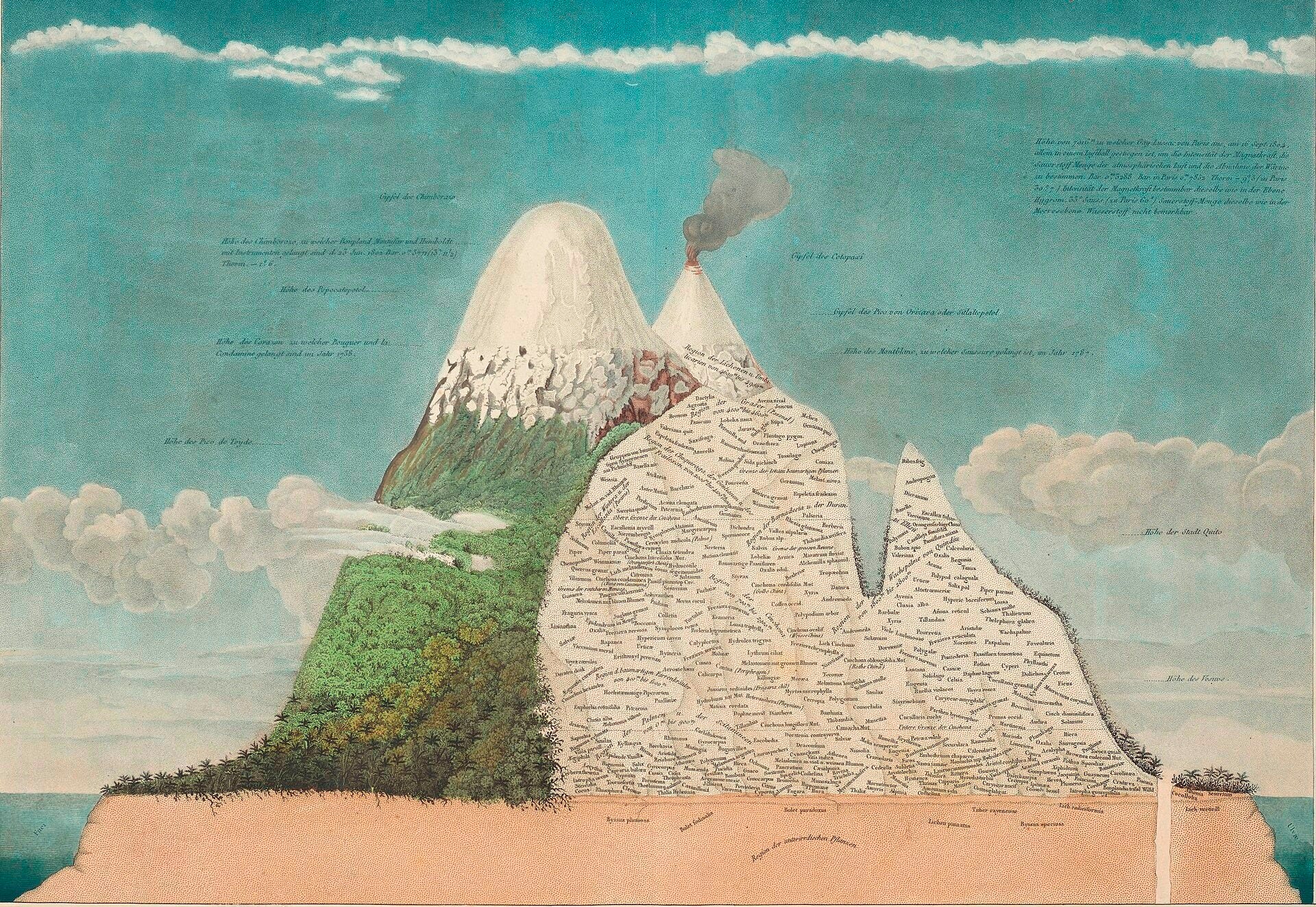
It was hard to be an environmental activist a hundred years ago, because back then there was no “environment.” That’s not to say there was no air or water or soil — those had been around for some time already. But the idea that these material surroundings made up a single system, and that this system’s health was the precondition for the health of human — all that had yet to be commonly understood in such explicit terms (at least in Western thought). This way of seeing the world achieved a new social forcefulness in the mid-century as a nascent counterculture dipped its toes in Eastern philosophy and indigenous cosmologies and visionary advocates like Rachel Carson sounded the alarm about the deadly consequences of industrial pollution. A full account is the historian’s remit, but the story is simple enough: the environment became an idea, and also a thing out in the world that people could point to, and talk about, and also protect.
There’s the key. The conceptualization of the environment occasioned a political movement that put bayou duck hunters, West Coast hippies, middle-America housewives, and white shoe lawyers on the same improbable team. These groups all had one thing in common: they understood that the health of the environment was in some way constitutive of their well-being. The blockbuster series of federal regulatory victories they scored over the subsequent decade shows just how powerful that simple insight was. To organize around a thing, people need to agree that it exists. For the environment to be political, it first had to be thinkable.
Something similar is happening now, although this time, it’s with our attention. Yes, we’ve had that word for centuries. But we are coming to see the political and existential valences of attention in new and transformative ways. As in the mid-twentieth century, we are learning to value our attention at the very moment we seem to be losing it. The multi-trillion dollar business model that’s fracking our eyeballs for salable “time on device” wreaks plenty of harm, but it comes with an upside: we are able, in our own exploitation, to say, Hey! Something’s wrong here. Part of me is hurting. What is that part of me? And why does it seem to touch… everything?
The central place of attention in our lives is newly thinkable, as we see its role in basic flourishing – of individuals, and of communities. Not only that: it’s becoming broadly recognizable as a politically tractable object. The constellation of groups that is forming around this new political center, a formation we call Attention Activism, is in its earliest stages. But it is stirring.
Every movement needs a rallying cry. In the 1960s, it was ECOLOGY NOW!, which lifted the Greek compound from 19th century German zoology and hoisted it high enough to stand for a broad political commitment to the material interconnectedness of beings and things. We propose a parallel phrase for the present moment: ATTENSITY NOW! Once a technical scientific term, attensity now encompasses a budding cultural sensibility to the unity and the lifegiving powers of our mental and sensory lives.
Attensity is the ecology of our immaterial being. It is a collective response to the ruin of our inner world, just as ecology was (and still is!) a response to the ruin of the planet. We will need both to survive.
Attensity! A Manifesto of the Attention Liberation Movement is available for preorder now. All our proceeds from its sale will support the work of the non-profit School of Radical Attention.
All of our readers in the New York metro area are warmly invited to join us for the Attensity! Launch Party at 7pm on Tuesday, January 20th in Manhattan’s historic Judson Church.
Hope you're correct that a widespread movement to reclaim and protect our attention from extractive forces is stirring. It's much needed, and it's every bit as important as the ecological movement.
Thank you for the work you're doing. We've just pre-ordered your new book and are looking forward to reading it!