

Friends!
I’m writing to you to circle back — no, no, I promise, not in a Microsoft Teams, “Hey! Where’s my deliverable?” way. I mean to say that we’re all circling back this time of year. We find ourselves, once again, in the middle of January, just as we did 365 days ago, and as we will (hopefully!) a year from now.
The year has “begun” again — which is to say, of course, that the sun has returned to the place in its orbit that the Gregorian calendar marks as the year’s beginning. Whether calendars from other cultures peg the passage of time to lunar phases or the changing seasons, most traditions reflect the cyclical rhythms of the natural world. By this view, the shape of time is a circle.
When we attend to circular time, we grant ourselves the repetition of beginnings. Every starting point, be it January or the Lunar New Year or Rosh Hashana, offers the paradox of a newness we have known many times before. What a gift it is to circle back.
In this issue, we attend to the circles and cycles around us. What possibilities emerge from circular thinking? What might movement through cycles teach us? In Visions of Attention, Haena surfaces the Aboriginal Australian story of the Dreaming, a narrative of creation that removes past, present, and future from a linear progression. In Practice in Practice, Peter recounts unexpected wonders in the simple craft of paper snowflakes. And in Stuff for Study, I share further reading on the cyclical time of oceans and the life-cycle model of the economy.
Read on! (And around…)
Cyclically yours,
Czarina Ramos
Managing Editor
Visions of Attention
An archive of images and mini-essays on the myriad modes of attention
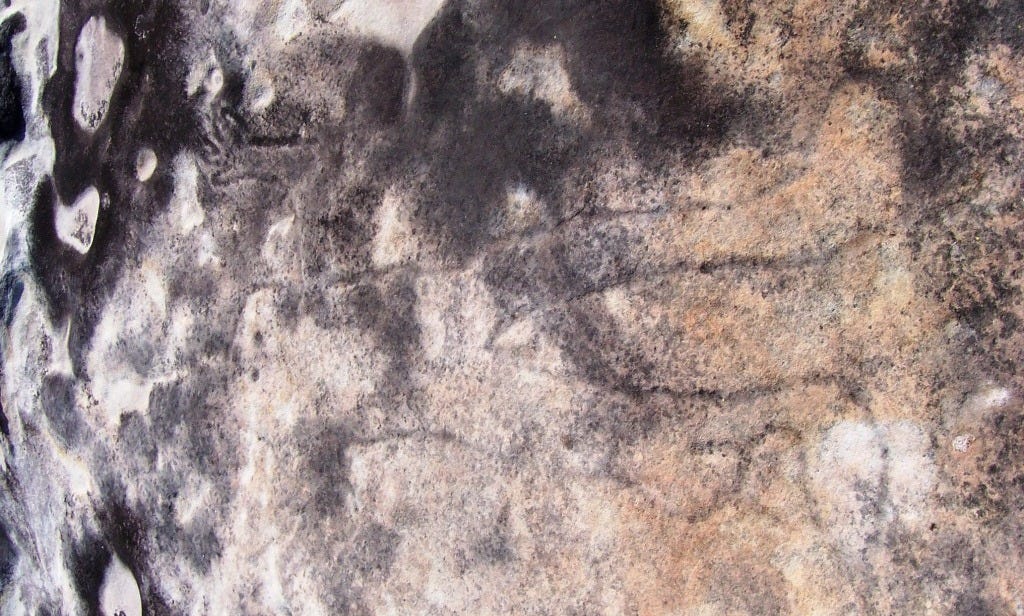
Dreaming in Continuum
The Dreaming (jukurrpa in Warlpiri language) has been passed down by Australian Aboriginal peoples for some 60,000 years. It is an account of reality that sees the past, present, and future happening all at once. This isn’t some mystical realm. Rock art, such as the above work from Ku-ring-gai Chase National Park depicting the creator god Baiame— situates the Dreaming in the local landscapes, elaborate rituals, and social structure and governance of existing communities.
The English term “Dreaming” was introduced in the 1890s by anthropologists to explain the connection between various Aboriginal Creation stories and their connection to families, landscapes, and identities. In practice, the term functions as a catch-all for a wide spectrum of interrelated cultural worldviews including the Arrerntic people’s “Altyerrenge,” Kija people’s “Ngarrankarni,” and the Ngarinyin people’s “Ungud.” If such a generalized term can teach us anything, it is to remind us that a “timeline” is, after all, only a metaphor. How does our understanding of reality change when our vision of time is not a line but a landscape?
— Haena Chu
Practice in Practice
Reflections on experiments in Attention Activism
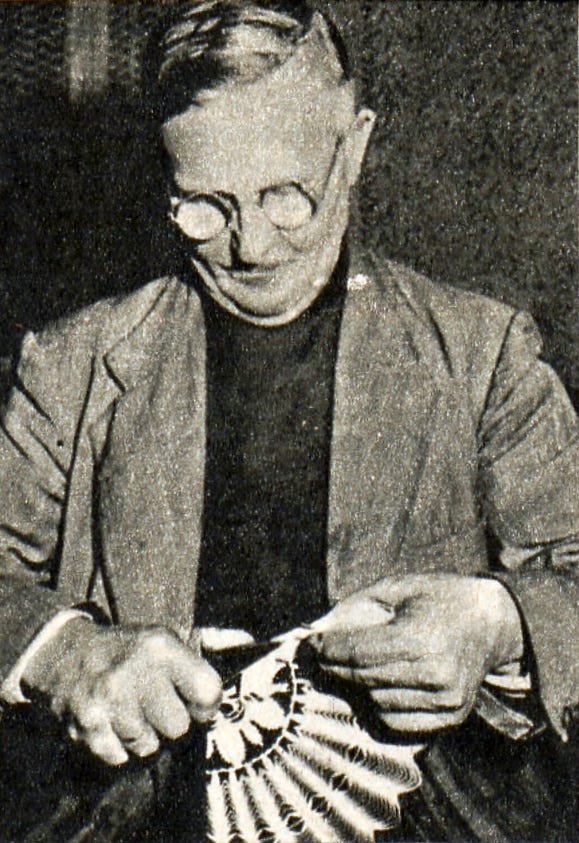

2025 was a hell of a year, and by December I was thinking in circles.
I mean this literally. For two weeks in the run-up to New Year’s, nearly all I did was fold little pieces of tissue into isosceles triangles, make a few cuts with a pair of craft scissors, and unfurl the things to reveal the strangely beautiful and relentlessly surprising complexity of a paper snowflake.
Okay, technically these were hexagons. But what hexagons! Some looked like lace; others like a Grateful Dead album cover. One bore a striking resemblance to the jalq’a textiles of southern Bolivia. What so captivated me — and this is why I made a show for my ever-patient family of unfolding the paper triangles, like butterflies emerging from their cocoon — was that these designs were so totally unpredictable. It looks like WHAT? That was not at all what I had in mind...
My mom speculated that I had inherited a family obsession with the German folk art of Scherenshnitte (literally, “scissor cuts”), as if crafting were a hereditary condition that waited until the age of 29 to express itself. What’s certain is that the snowflakes formed a wintertime refuge for my overtaxed attention at the end of a trying year. I had found a new sanctuary, one where the world shrank to the tip of my scissors and the floor was littered with homestyle confetti.
Sanctuaries are made to be shared. So on New Year’s Eve, my fiancée and I invited friends to our apartment for a night of paper-cutting and collaging, leaning over each other and spilling drinks as we collectively pasted together our vision for the coming year. The couch contingent riffled through high stacks of old magazines in search of kooky figures and pretty patterns, while those circled about the extra-large poster board on the kitchen floor wielded the glue sticks. The wind thrashed against the window. Slowly, the poster filled with a varicolor mashup of ice cream and naked figures and dragonflies. Time slowed. By the time 2026 came knocking, the new year was a welcome surprise.
— Peter Schmidt, Editor-in-Chief
Stuff for Study: Circular Logic
Readings and other resources for continued learning on attention and politics
Oceanic cycles and the immense depth of time — James Bradley for Aeon
Can noticing seasons be a radical act? — Holly Haworth for Emergence Magazine
Modeling life cycles in the economy — Christine Ro and John Fullerton for Atmos
The dread and bewilderment of walking in circles — Robert Moor for The New Yorker
How time takes shape in a queer garden — Priya Subberwal for Orion Magazine
— Czarina Ramos
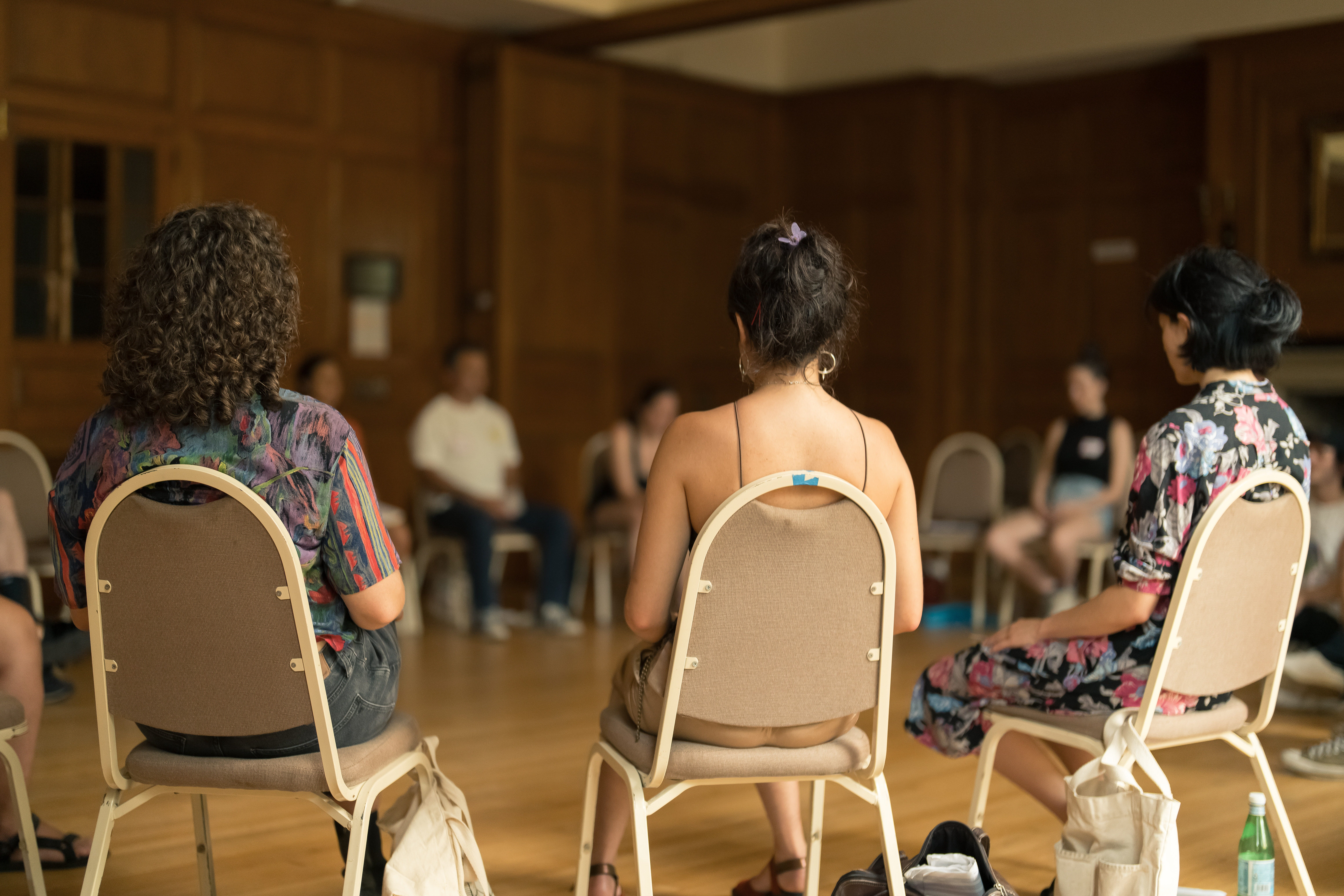
IRL
Sat, January 17th: Learn the basics of screenprinting and create our own upcycled SoRA merch in an open screenprinting workshop led by Francesca Barr.
Sat, January 17th: Join us at Washington Square Park at 3:03 PM for an Attention “Intervention” — friends and strangers will come together in an extended attention practice for all to see. Come early to get oriented!
Tue, January 20th: Join D. Graham Burnett, Alyssa Loh, and Peter Schmidt of the Friends of Attention for the launch of their new book, ATTENSITY! A Manifesto of the Attention Liberation Movement.
Thu, January 29th: In VESSELS: Ritual of Attention, artist Park Karo will lead participants through a ritual engagement with everyday objects and the material of their inner worlds. VESSELS is a series of four participatory art events organized on the occasion of the publication of ATTENSITY!.
Find more workshops, events, and gatherings here!