

Dear Friends,
Let's cast our memory back, approximately five hundred years past, to 2011. I am a high school freshman, and Facebook is on the cusp of world-warping omnipresence. Social media is new-ish, and the irony of its evidently anti-social effects is still fresh. I remember calling home on my friend Mitch's landline to ask my parents if I can open a Facebook account on the Elliott family desktop computer. My dad assents, though his voice sounds somewhat stunned, as if he has just been ambushed.
He had been ambushed, of course. That was my intention. I was aware, as most other young people are, that adults had misgivings about these new online spaces.
What were those misgivings exactly? As I remember it, the principal concern among pundits, English teachers, and parents in the car-pool was that these social networks would make kids more self-centered. No good could come from spending that much time fussing over pictures of one's own face.
It's funny to look back at those days of innocence – not just because the perils of teen vanity seem quaint in comparison with the fiery existential calamities that Big Tech hath wrought. Nor is it even because our parents' predictions were, strictly speaking, off the mark. Social media has furnished us with unimaginable opportunities to obsess over (and artificially sharpen) one's own jawline, as featured on subway ads during our morning commute.
Still, it’s hard to say that the internet has made us more self-centered, when what the internet has really done is destabilized the very meaning of the “self.” You and I have been mirrored, uploaded, distributed, dissolved, fractured, recomposed, optimized, self-peddled, Facetimed, and Facetuned with such exhilarating and dizzying intensity that it's hard to say what, exactly, “we” are.
To that end, our newest dispatch of The Empty Cup takes on the slipperiness of the digital self. In Stuff for Study, Vitória highlights the exhausting phenomenon of influencer creep and TikTok's uncanny ability to know you're gay before you do. In Visions of Attention, Haena puzzles over the allure of grotesque digital avatars. And in From the Trove, David sets forth literary critic James Wood's Serious Noticing as a toolkit for making sense of the ever-shifting status of the I.
Read on, friends! And remember that the best cure for digital dissociation is to get together with other people — this is the prevailing spirit of Attention Activism. For anyone who'd like to get serious about this, check out SoRA's Community Organizing Fellowship (for which we are accepting proposals through June 20th!).
Self-ishly yours,
Peter Schmidt
Editor-in-Chief
Stuff for Study: On the boundaries between internet & self
Readings and other resources for continued learning on attention and politics
How influencing invades life beyond the feed — Sophie Bishop for Real Life
Is TikTok optimizing queer selfhood? — Lucas Gelfond and Anabelle Johnston for Logic(s) Magazine
The endless (and exhausting) performance of online authenticity — Lauren Oyler for The Baffler
Who am we? Selfhood as a multiple, distributed system — Sherry Turkle for Wired
The labor of self-creation in the social media factory — Rob Horning for The New Inquiry
The end of authenticity...and thank God— Eliza McLamb on Substack, words from eliza
- Vitória Oliveira
Visions of Attention
An archive of images and mini-essays on the myriad modes of attention
Weirding the Avatar
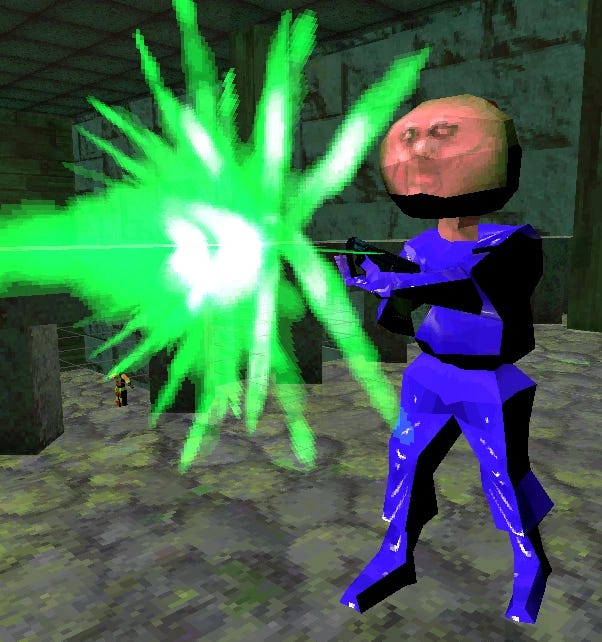
In the early 2000s, a genre of fiction called the New Weird skipped out on the grandeur and sophistication of the sibling genre of multi-volume high fantasy by wedding supernatural phenomena with the Kafka-esque banal. Unlike “hard” science fiction writers, New Weird pioneers like China Miéville, Jeff VanderMeer, and Haruki Murakami embraced absurdity in place of virtuosic worldbuilding and lowly creatures in place of awe-inspiring monsters. Case in point: Miéville’s King Rat spends an entire page describing the protagonist — who turns out to be a literal rat-human hybrid — eating trash.
While the New Weird formed in the nascent years of the World Wide Web, its embrace of unceremonious ugliness (“pulp”) has proven a curiously persistent face of online culture. In the RPG platform VRChat, an ex-military contractor wearing a penguin skin muses on the realities of warfare with haunting detail, flapping his polygonal wings as Winnie the Pooh listens intently. Indie games like Cruelty Squad parody the hyperstimulation of late capitalism with vomit-inducing colors, dizzyingly pixelated backgrounds, and counterintuitive controls (the engineered discomfort of these interfaces seem punishingly apt for a world where users buy and sell buy augmented organs).
In a time when we can take virtually any form online, why would we desire to make our digital avatars so grotesque? Perhaps ugliness is the last stand against the all-consuming worship of optimization and beautification. Perhaps we would rather mutate ourselves than be shaped in the unholy image of the self-as-digital-commodity. Beauty may be truth, and truth beauty — but in the age of the internet, ugliness is a rare kind of freedom.
- Haena Chu
From the Trove
Long-form recommendations from the Friends of Attention’s collaborative Attention Trove archive
Noticing as Rescue

Literary critic and writer James Wood’s Serious Noticing provides much-needed equipment for monitoring the ever-shifting status of “the self.” Hot takes can be useful in this department – Naomi Klein's Doppelganger and Jonathan Haidt's The Anxious Generation have made important contributions to an urgent conversation—but in times of accelerating change, there's no substitute for a handy analytical toolkit. In Serious Noticing, Wood offers attentional methods to see the transforming self in any situation.
He writes: “We are, in a way, all internal fiction writers and poets, rewriting our memories. … A good deal of apparently external noticing is simultaneously internal noticing… It is by noticing people seriously that you begin to understand them; by looking harder, more sensitively, at people's motives… What do writers do when they seriously notice the world? Perhaps they do nothing less than rescue the life of things from their death.” In this manner, the habit of collecting life’s irreducible human details can “rescue us from our death… the slow death that we deal to the world by the sleep of our attention.”
- David Landes
IRL
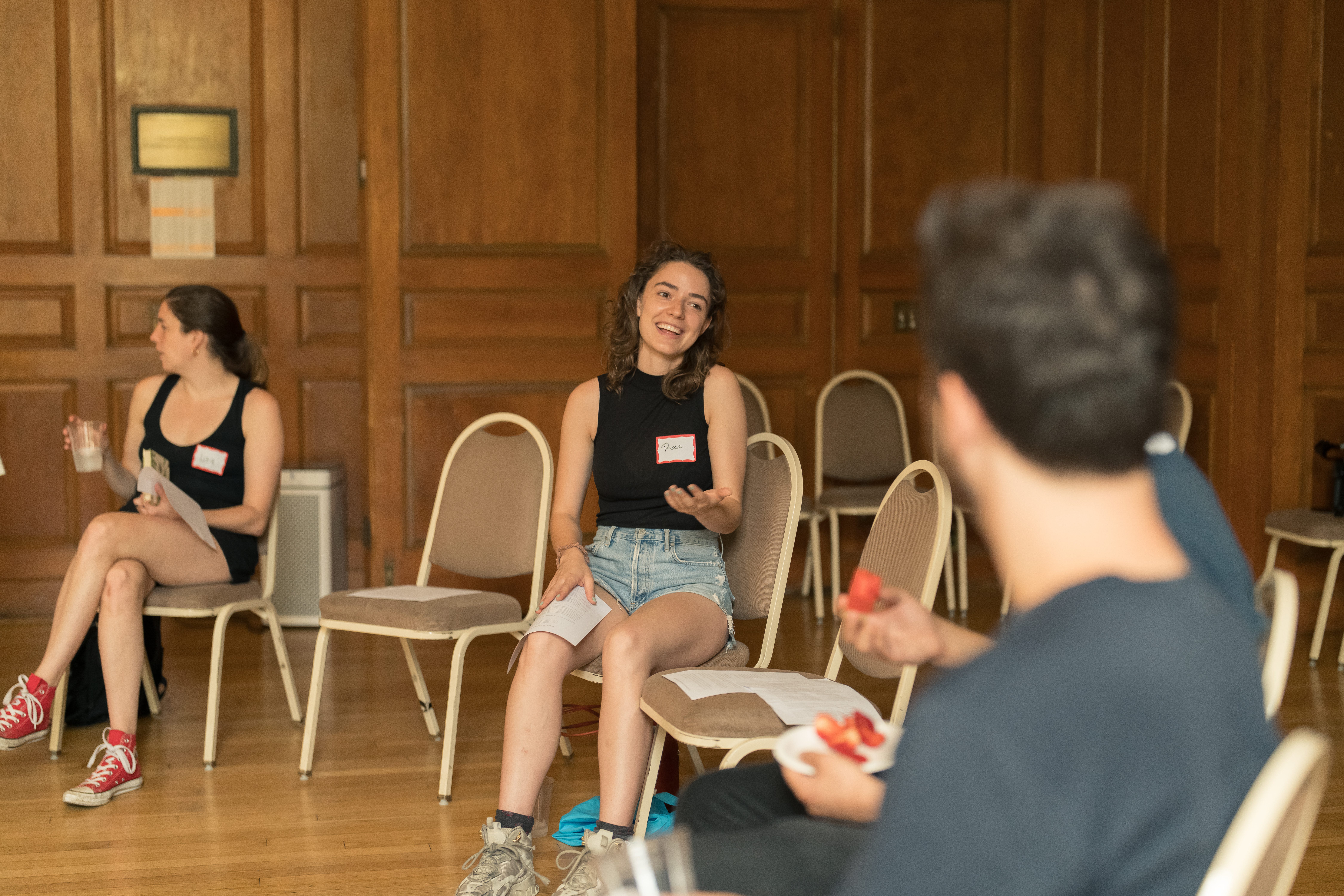
Tue, Jun 10: CREATURES, our in-person seminar on disgust, fascination, and NYC's non-human populace
Thu, Jun 12: ATTENTION ACTIVISM 101, our online seminar on the fundamentals of Attention Activism
Mon, Jun 16: TALKING ABOUT THE WEATHER, our in-person seminar on the nexus of attention and climate politics
Mon, Jun 20th: Extended DEADLINE for our Attention Activism Community Organizing Fellowship
Find more workshops, events, and gatherings here!