

Friends!
In 1999, MIT computer scientist Kevin Ashton posed a problem to executives at Procter & Gamble: a certain shade of brown lipstick always seemed to be sold out on store shelves. The issue was that retailers couldn’t send information to supply chains to meet their customers’ brown lipstick demands. He proposed a futuristic solution: What if the shelves could talk? What if a signal could be transmitted every time the lipstick sold out? He named this imaginary technology the “Internet of Things.”
The future is here, and so is the Internet of Things (now referred to as IoT), which equips objects with the ability to “sense” their environment and communicate/coordinate with other objects in the network. If this sounds a bit like breathing life into electronics, that's because similar configurations exist in ecosystems: consider a forest's mycorrhizal networks, in which plants send messages to each other through extensive connections of roots and mycelia, allocating water, nitrogen, and carbon to nodes in need within the plant community. Forest ecologist Suzanne Simard nodded, cheekily, to this very resemblance when she referred to subterranean mycelial systems as the “Wood Wide Web.”
Our digital forest is now teeming with sensing species: roombas mapping out our interior spaces for Amazon, Oura rings telling us when it’s time to rest, and smart surveillance technology embedded in urban infrastructure predicting crime (à la the 2002 film Minority Report starring Tom Cruise). Like long-established mycorrhizal networks, we’re more connected than ever to objects and information systems. Yet unlike these webs of flora and fungi, the Internet of Things has proven dubiously amenable to the flourishing of life — human or otherwise.
In this issue, we’ll be exploring the Internet of Things. In Stuff for Study, Vitòria points us to the ghosts of consciousness trapped in our smart homes, the (false?) promises of ease in consumer electronics, and the Internet of “Quasi-Military” Things at the US-Mexico border. In Visions of Attention, Haena surfaces the experiments of networked experience by Haus-Rucker-Co's Flyhead Helmet. In From the Trove, David shouts out Bruno Latour’s Actor-Network-Theory, which situates us as equal “actants” among other human and non-human entities in a web of relation. For further reading on human-technology relations, we suggest visiting SoRA faculty member Jac Mullen’s conversation with our editor-in-chief Peter Schmidt, in which they discuss AI as an externalization of our attention — and what this may mean politically.
In the spirit of cultivating our human-human connections, we invite our NYC friends to join us in Dumbo for upcoming seminars on the attentional dynamics of MARTYRS & MOVEMENTS, the 8.5 x 11 sheet of paper, and the politics of PEACEMAKING. For an extended study of the connection between our interior selves and our exterior geographies, check out WALKING & THINKING, a special event on August 23rd.
And if you’re not in the neighborhood, we encourage you to get in touch with us here! Comment below — we’d love to hear your thoughts on living in the IoT.
Connectedly yours,
Czarina Ramos
Managing Editor
Stuff for Study: Smart World
Readings and other resources for continued learning on attention and politics
The smart home is a haunted house of invisible labor — Julia Foote for Real Life
Alexa, a panopticon for every parlor — Jessica Bruder and Dale Maharidge for Literary Hub
With virtual reality, experience is limitless – what are we supposed to do with it? – Jaron Lanier for The New Yorker
For sale: consumer electronics, or the promise of an easy future – David Roth for Defector
"Quasi-military" smart devices are policing our borders – Petra Molnar for Jacobin
- Vitòria Oliveira
Visions of Attention
An archive of images and mini-essays on the myriad modes of attention
This is Your Mind on Insects
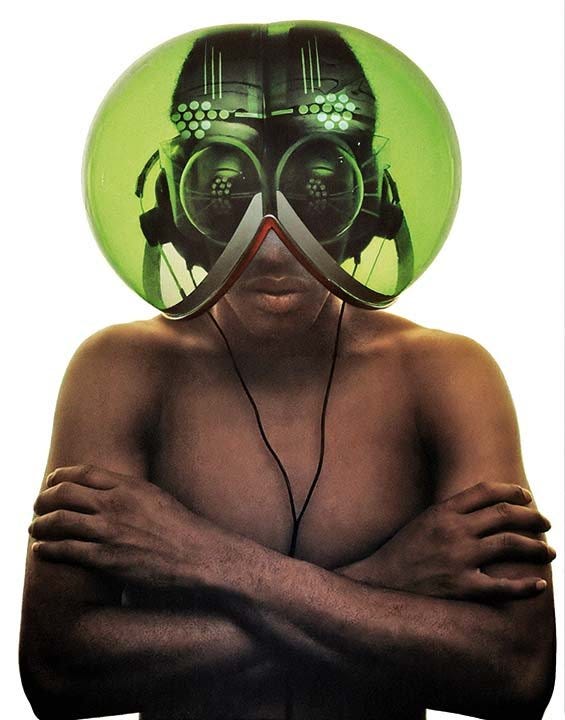
Haus-Rucker-Co was an Austrian design studio formed by Laurids Ortner, Günther Zamp Kelp, and Klaus Pinter. Across the 1960s and 1970s, this cohort of forward-thinking designers created a series of experimental architectural interventions that aimed to change people’s perception of the urban environment through wearable, portable, and sometimes even edible designs. The Flyhead Helmet, from their Mind Expanding Program (1967–1971), was a green-tinted helmet that refracted the user’s vision with kaleidoscopic prisms and scrambled their hearing with headphones.
Haus-Rucker-Co’s wearable design appears quaintly decorative compared to today’s smart devices, which accumulate and exchange data at previously unthinkable speeds. But the motivations behind these designs weren’t so far off from that of today’s IoT. The Flyhead Helmet and other projects emerged from their sustained interest in the nascent field of network theory, which supplanted the fixed relationship between viewer and object (including artworks) with a web of active agents and the flows of information that linked them. In fact, many of the collective’s apparatuses were “intended to be networked to other objects (and their wearers).” That is, the bearer of the Flyhead Helmet would not only tap into an alternate experience of the world but was expected to share that experience with users of other devices, like the Drizzler and Viewatomizer. Sound familiar?
- Haena Chu
From the Trove
Long-form recommendations from the Friends of Attention’s collaborative Attention Trove archive
We Are All Actants
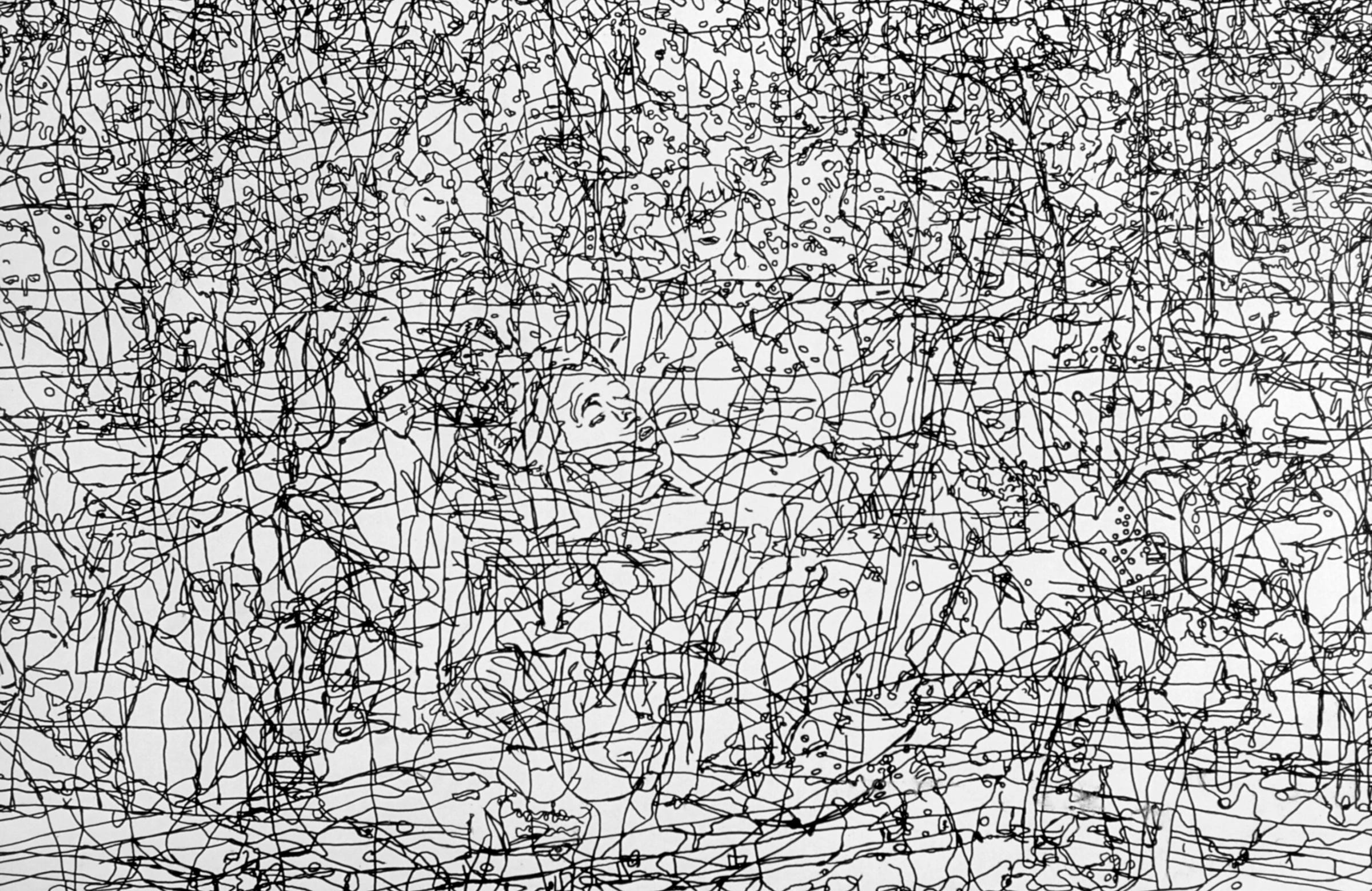
What if we humans have always been the “things” in a network of things? This is the premise of science scholar Bruno Latour's Actor-Network Theory (ANT), an idea useful in the analysis of complex systems. Modern technological infrastructure like the IoT and social media networks operate through webs of social forces created by human/non-human “assemblages.” According to ANT, social phenomena (like attention) are outcomes of the complex interplay of different “actants” within so-called actor-networks. Spend some time with Latour's thinking, and you’ll start to see these networks everywhere. By this view, the IoT is nothing new — it simply makes explicitly visible the actor-networks that have long constituted a world formed by multiple agents and the connections between them.
- David Landes
IRL
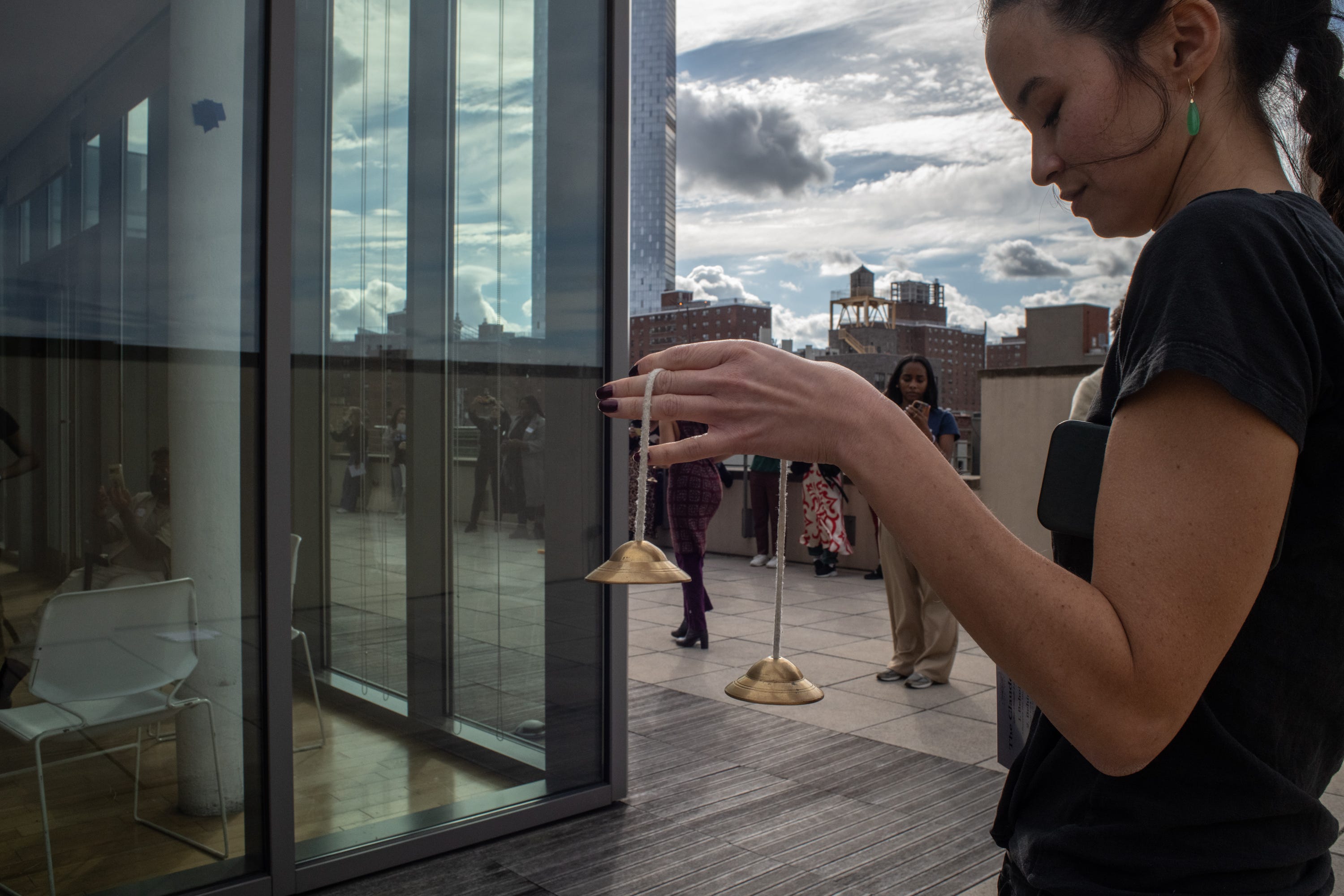
Wed, August 13th: MARTYRS & MOVEMENTS, an in-person seminar exploring the attentional dynamics of martyrdom, with a focus on rage and love as interconnected forms of sustained collective attention.
Thu, August 14th: 8.5X11, an in-person seminar on how the two-dimensional sheet becomes a reliable resource for thinking through and realizing three-dimensional ideas.
Mon, August 18th: PEACEMAKING, an in-person seminar studying cases of conflict resolution to invite insights in the peacemaking process.
Sat, August 23rd: WALKING & THINKING: SoRA On The Move. In this mobile study, we’re going to WALK – from the SoRA headquarters in Dumbo, Brooklyn, to Fort Tryon Park at the northern tip of Manhattan — and THINK about the relationship between… Well, walking and thinking!
Find more workshops, events, and gatherings here!