

Friends!
Attention fracking harms everyone, but it harms kids especially. You know this. The reigning conservative establishment knows this. Kids know this! And there are oodles of data to back it up.
This week, we fill our cup with reports on the strange new face of childhood in the internet age. In a special dispatch, I and SoRA fellow Danielle Bejerano report on the government’s attempts to preserve family values within the architecture of the attention economy. In Stuff for Study, Vitória, shares essays on climbing teen suicide rates and on the co-optation of parental worry by the surveillance state. In Visions of Attention, Haena reflects on how The Jetsons sanitized and popularized technofuturist aesthetics. And in From the Trove, David sits with a gorgeously illustrated meditation on the powers of attention for young children: Kobi Yamada's Noticing.
Perhaps the most heartening feedback our team has ever received from a SoRA participant was that our programming felt like “adult kindergarten.” That's exactly what we're after! Because, while kids are indeed threatened by the rampant abuses of Big Tech, they also stand to be our greatest guides in the years ahead. Anyone who has spent time with a child knows the beauty of seeing a new mind shape itself to the world. We “grown-ups” could stand to learn a thing or two from the manifold powers of play.
So join us for upcoming seminars on POP FANDOMS, WEAVING ATTENTIONS, and FLIRTING and for our Attention Lab workshops in Dumbo. And for our friends in sweltering NYC, stay cool out there!
Peter Schmidt
Editor-in-Chief
Special Dispatch: Attention Activism in Trump’s Washington
Peter Schmidt and Danielle Berejano report on a day-long conference hosted by the Federal Trade Commission on The Attention Economy: How Big Tech Firms Exploit Kids and Hurt Families.
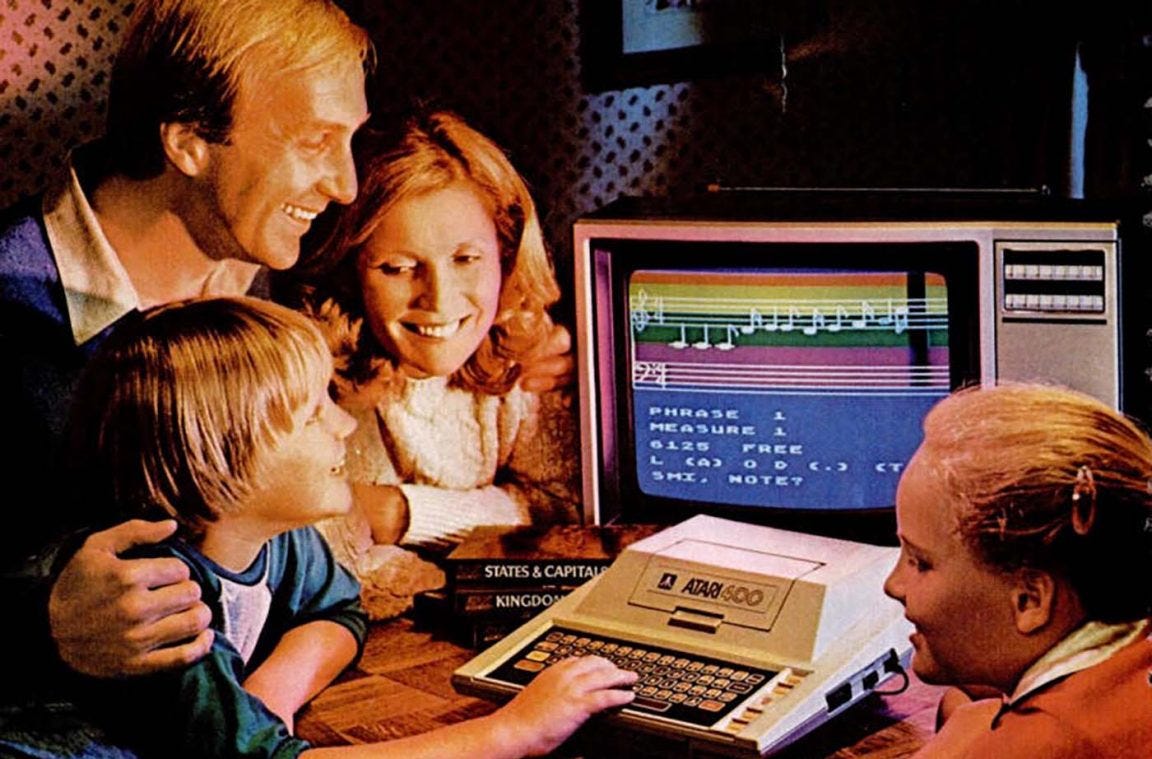
“Several hours of presentations, testimonials, and friendly panel discussions amounted to a genuinely distressing rundown of the harms of the attention economy: cyberbullying, disordered eating, data privacy violations, sexual grooming, violent pornography, manipulative AI chatbots, and addiction — plus the (in our view, comparatively dubious threat of) ‘weaponization of our children’s data by agents of cancel culture.’ But talk of actual attention was sparse, and the effects of Big Tech on children’s attentional capacities themselves went largely unremarked.
Instead, conservative values stood front and center. ‘The purpose of innovation and a just society is to promote the flourishing and success of ordinary families,’ announced FTC Chairman Andrew Ferguson, asserting that parents have a ‘sacred charge to protect their children’s reputation and good name.’”
– Read our full report.
Stuff for Study: Growing up in the attention economy
Readings and other resources for continued learning on attention and politics
Are higher age limits enough to protect children from social media? — Paris Marx for Disconnect
Teen suicides are on the rise – can we prove that tech companies are at fault? — Andrew Solomon for The New Yorker
“Attention capture” technologies have created a crisis in the classroom — Jac Mullen for The Nation
Your child’s best friend might be a chatbot — Jessica Grose for The New York Times
When the nanny cam brings the surveillance state home — Hannah Zeavin for Real Life
Being sad on the internet: what young people actually do online — Ben Tarnoff and Ysabel Gerrard for Logic(s)
- Vitória Oliveira
Visions of Attention
An archive of images and mini-essays on the myriad modes of attention
The Jetsons: Space Age for the Whole Family
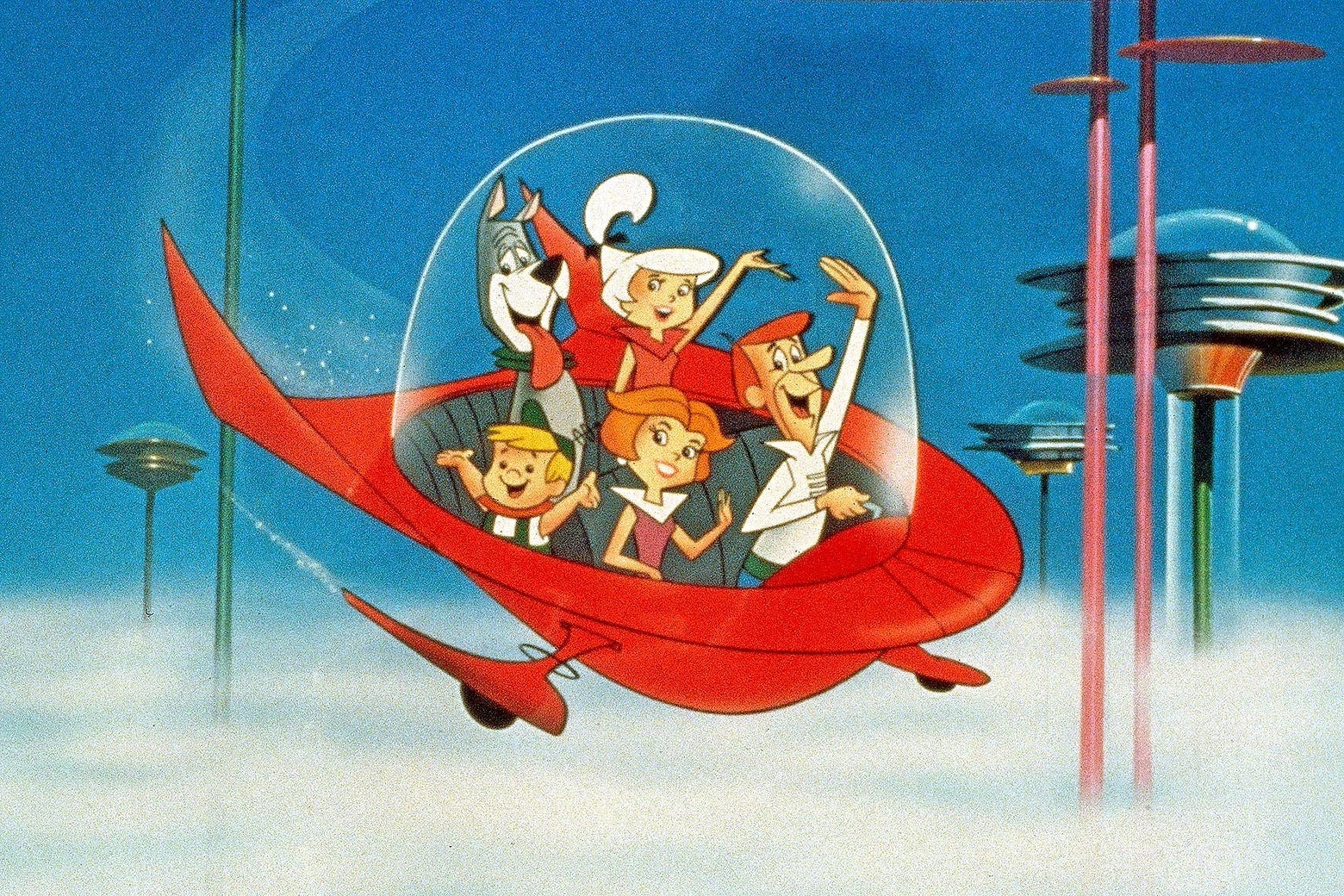
One of the most iconic cartoons in the post-war U.S., The Jetsons, is known as much for its elaborate futuristic architecture as for its catchy jingle. But as far-fetched as it appeared to be, the “Jetsonian” utopia of three-day workweeks and robot dogs drew on an architectural style that was well established by the 1950s and 1960s. The show’s production studio was located in Hollywood, where the voice actors had only to hop in their cars to absorb the infamous “Googie” architecture that dominated West Coast highway vistas: the Space Needle, Los Angeles International Airport, and McDonald’s golden arches.
Googie Architecture's curved lines and exaggerated shapes, neon colors, and smooth surfaces communicated optimism for an open and promising future, promising to surpass the mundane limitations of structural integrity, material possibility, and gravity itself. Its innocence (naivete?) translated near-frictionlessly into the narrative conventions of an animated children's show. It broadcasted well, too. After all, Googie promised prosperity for the average Joe and all of his family. In place of classical architecture's exclusionary palaces, congress buildings, and opera houses, Googie glamorized diners, arcades, car washes, and coffee shops (the word “Googie” itself originated from a coffee shop in Southern California) and promised people that their everyday lives would benefit from the space race innovations beamed to them through radios and TV sets.
The scorn of professional architects certainly hasn’t prevented the Googie aesthetic from shaping contemporary visions of the “futuristic.” The complex stakes of technological progress are thus white-washed by the bright tones of a childhood fantasy. Can the future really be so bleak when even the dogs are smiling?
- Haena Chu
From the Trove
Long-form recommendations from the Friends of Attention’s collaborative Attention Trove archive
The Quiet Aliveness of Clouds
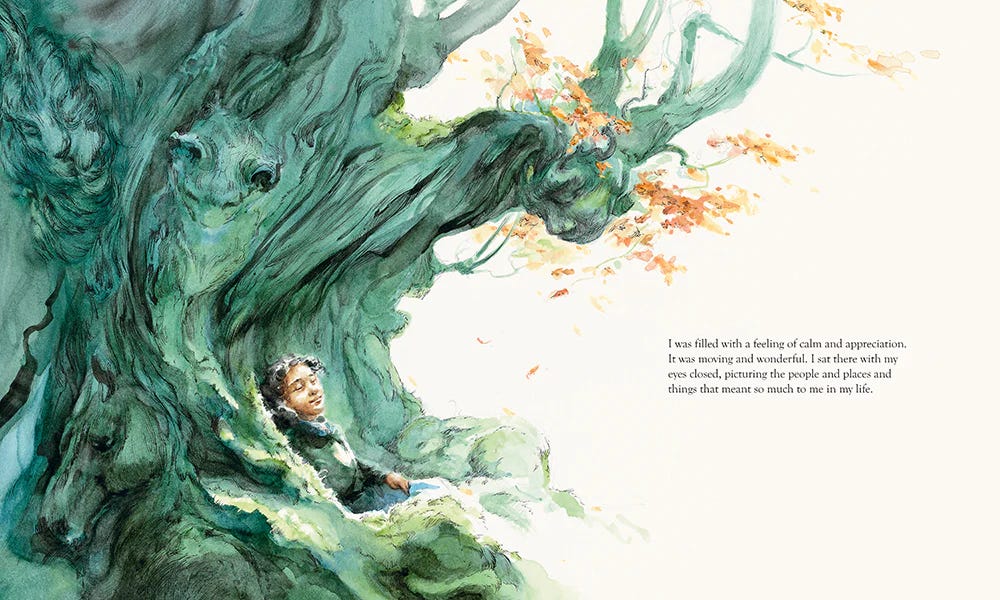
Noticing is Kobi Yamada's children’s book about… attention! A young child learns from an elderly painter how to look: “The more you pause and allow for the extraordinary, the more you find it.”
Through lavishly watercolored pages, the painter guides the child out of normalized (un)noticing and away from solicitous screens. Her advice – how to look at clouds, the land, oneself – promotes active spectatorship through attentional curiosity. The child begins to get it: “I wanted to see what she saw… what we see depends on what we look for… though we all may look at the same thing, we don’t always see it in the same way.”
The book's elegant illustrations echo the story's celebration of quiet aliveness in fine details. Autumnal colors, luminous hues, and heavily textured surfaces make the spread itself an object worthy of close inspection — and an opportunity for its young readers to apply the sage painter's attentional dictums.
- David Landes
IRL
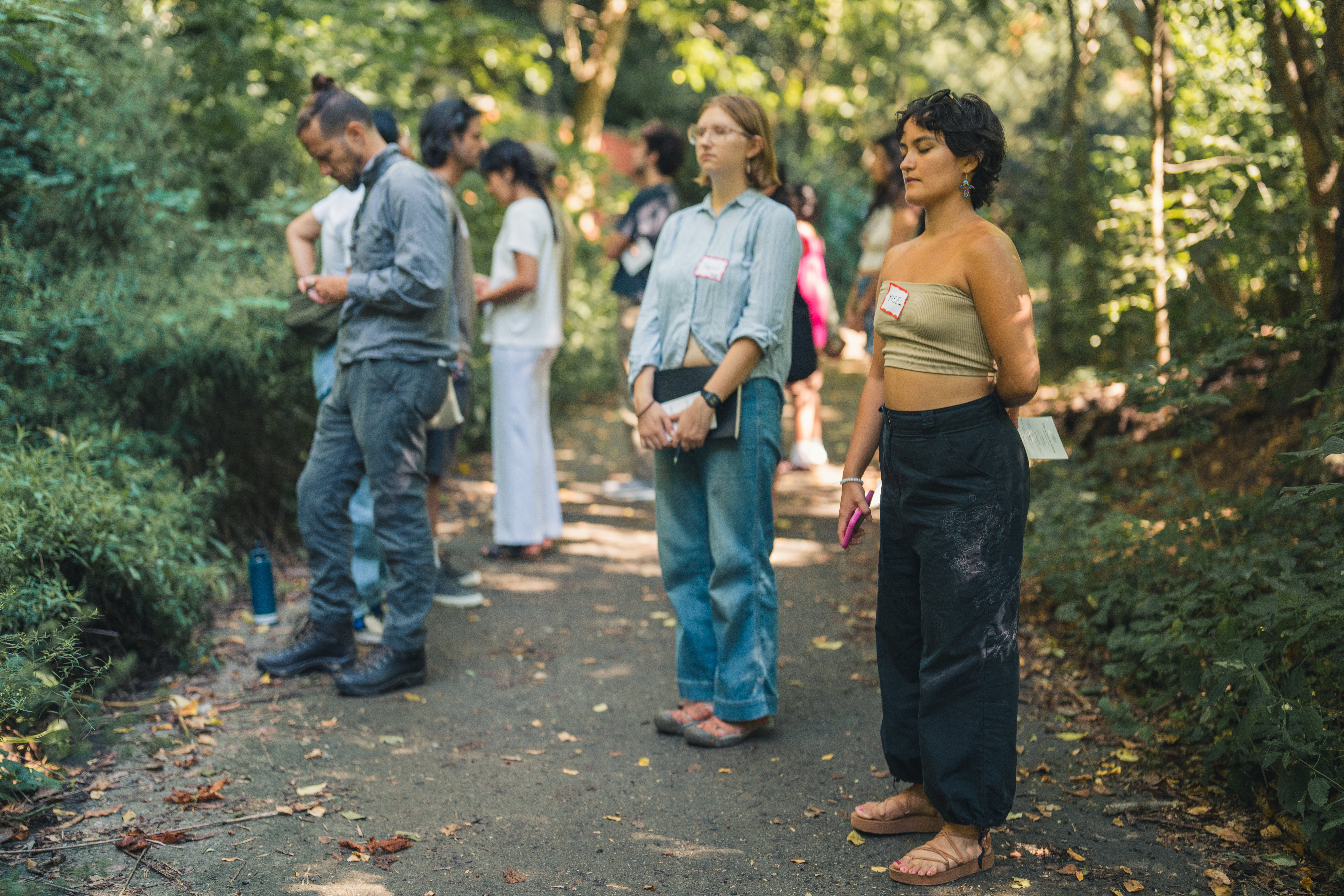
Wed, Jun 25: PRIDE LAB, Our Attention Labs introduce participants to the three pillars of Attention Activism: STUDY, SANCTUARY, and COALITION
Thurs, Jul 3: WEAVING ATTENTIONS, our in-person seminar on weaving our attentions across the interstitial spaces between communication, thought, and action
Mon, Jul 14th: POP FANDOMS, our in-person seminar that examines fan culture through an examination of pop culture archetypes across the US and Japan
Tue, Jul 22nd: FLIRTING, our in-person seminar that pays explicit attention to what we like about each other (i.e. flirtation) as a form of attentional solidarity in the face of systemic digital isolation
Find more workshops, events, and gatherings here!