

Mihir Kshirsagar is a lawyer, scholar, and policy analyst with decades of experience helping governments think about how to control bad actors in the digital sphere. He runs the Tech Policy Clinic in the Center for Information Technology Policy at Princeton University, and holds an appointment that works across the School of Engineering and the School of Public and International Affairs. He also led the 2024 “Politics of Attention” Summer School with the Friends of Attention, on “Attention and the Law.” He talked with SoRA co-founder D. Graham Burnett about some recent important US litigation that touches directly on the work of Attention Activism.
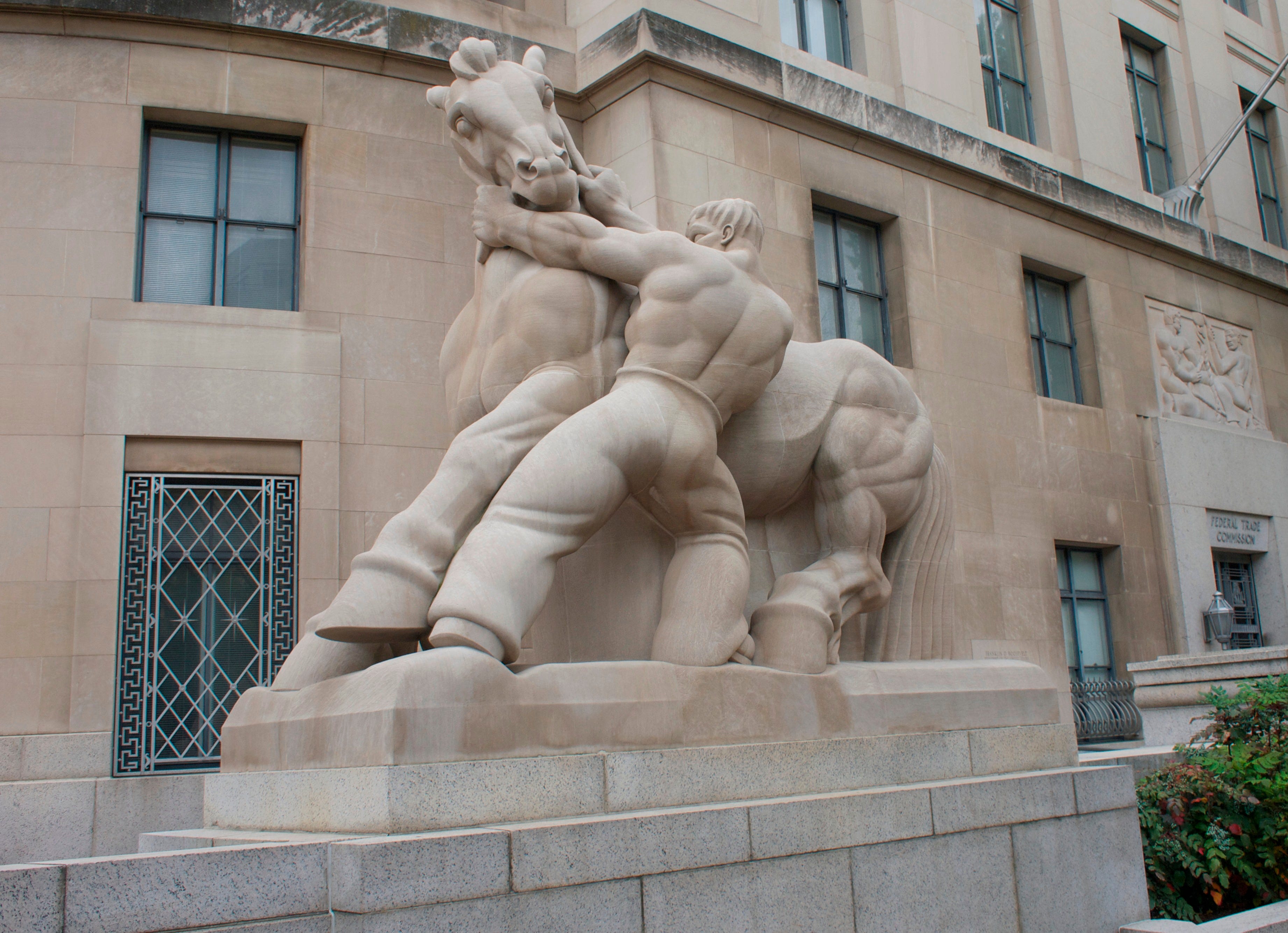

DGB: Hi Mihir! Thanks for taking some time to talk with us. In November of this year, an important legal case came to a close: Federal Trade Commission vs. Meta Platforms, Inc. pitted the Federal Government against Mark Zuckerberg’s company. For starters, could you just lay out for our readers what was at stake in this case? How did it start?
MK: So the background is that the FTC sued Meta in December 2020, alleging the company monopolized “personal social networking” by acquiring Instagram in 2012 and WhatsApp in 2014. The theory: Facebook identified emerging competitors and bought them to retain its dominance. Internal emails showed Zuckerberg explicitly describing this as a “buy rather than compete” strategy. This kind of thing can be illegal in the US, because of a history in this country of laws that aim to stop single corporate entities from controlling whole areas of commerce. This is “antitrust” regulation, the fight against “monopolies.”
The FTC sought an aggressive remedy: divestiture, which would have forced Meta to spin off Instagram and WhatsApp. If successful, it would have been the most significant corporate breakup since AT&T in 1984.
DGB: And so, what happened in November?
MK: Meta won. Judge James Boasberg, who is an Obama appointee, ruled that even if Meta had monopoly power in the past, the FTC failed to prove it holds that power now.
The case turned on a key concept in antitrust law: market definition. The FTC argued there’s a distinct market for “personal social networking” — apps connecting friends and family — separate from broader social media, and that Meta monopolized this market. Judge Boasberg rejected this definition. He relied on evidence showing that after TikTok exploded on the scene in 2020, the market changed entirely. YouTube Shorts arrived. And Meta’s own products abandoned the social networking model.
Astonishingly, internal documents show Facebook users now spend just 17% of their time viewing posts from friends and family. On Instagram, that is 7%. These platforms pivoted to algorithmically-driven video feeds, functionally indistinguishable from TikTok and YouTube. The court said you can’t define a market around “personal social networking” when Meta itself basically abandoned any such enterprise.
For years, people in this movement have described these platforms as engaged in “attention fracking” by extracting user attention through behavioral manipulation to sell to advertisers. At trial, under oath, industry executives described their own business in nearly identical terms.
DGB: That makes sense, I guess. There are a lot of issues in play in legal disputes like this, and there have been a lot of OpEds on the outcome of this case (Tim Wu, for instance, wrote sharply against the judge’s opinion in the New York Times). You have your own take on the case. Could you lay that out for us?
MK: Tim Wu argues that Judge Boasberg’s reasoning defies common sense and sends a message of corporate impunity. These companies are huge, and they do seem to control a lot! So Wu invokes Teddy Roosevelt and warns of cynicism when courts fail to restrain dominant companies. I am sympathetic to his concerns. But the judge hewed closely to the law and facts. And hidden in the decision is, I think, an important vindication of the activist position and the glimmer of a path forward.
DGB: Really? Wait! Tell us about that!
MK: For years, people in this movement have described these platforms as engaged in “attention fracking” by extracting user attention through behavioral manipulation to sell to advertisers. At trial, under oath, industry executives described their own business in nearly identical terms. Internal documents showed platforms competing over a user’s “marginal time.” Experiments revealed that boosting friend content barely moved engagement, while algorithmically-optimized video increased time-on-platform by 48%. Judge Boasberg explains the business model for driving engagement: “time spent is the best proxy for what drives these apps’ revenue: ads.”
In other words, the industry confirmed what activists have been saying.
DGB: That’s fascinating. In a way, it’s as if the testimony in this case gives the lie to the idea that these platforms are “connecting” us.
MK: Exactly.
DGB: Basically that claim is about as true as the petroleum frackers claiming that they are just out there trying to make sure that all the natural gas in the deep earth can just “come together as one” — like Saudi Aramco making ads about how they work to let the world’s subterranean crude reserves “connect”!
MK: That’s kinda funny. The analogy is not perfect — but it is more true than it should be…
DGB: Okay, well, what’s next in all this, in your view?
MK: Well, the same evidence that sank the FTC’s case undermines the platforms’ next line of defense. These platforms will now try to protect what are effectively their casino operations (extract money by keeping people pulling the levers all day and all night) by dressing them up as “editorial judgment.” When states regulate algorithmic amplification or addictive design, Meta and TikTok will claim First Amendment protection — arguing their feeds reflect expressive choices, which are in many ways sacrosanct in US law.
DGB: Like a newspaper selecting stories — this is editorial judgment, and strongly protected as “freedom of speech.”
MK: Exactly. And these companies have tried to defend their freedom to do pretty much whatever they want — to post whatever content they choose, and make it available to anyone — by asserting first amendment privileges. They are, they assert, like a newspaper or magazine in this regard, and entitled to the same protections. This trial record exposes that as a total fiction.
DGB: Because these aren’t “editorial decisions” at all…
MK: Right! Not in the least. They’re yield optimization for ad inventory. They are more like the stuff that shows up on a video-poker screen in a casino, since those “hands,” too, are often algorithmically optimized to look promising, to keep people playing. The algorithms that determine social media feeds are indifferent to content; they care about performance metrics. They maximize “engagement” with the screen, not with people or ideas. That’s a pure commercial operation, not a press function.
DGB: So it’s almost like a casino claiming first amendment privileges for being able to show people any misleading stuff on a slot machine screen! Like rigging the system to show “BAR, BAR, Cherry” and then “BAR, Cherry, BAR” with high frequency — to give folks the sense that they have almost won, again and again…
MK: We know from Natasha Dow Schull’s book Addiction by Design, that casino owners programmed their machines to do exactly that kind of thing. But right, they never tried to claim a First Amendment defense! That would have been absurd.
DGB: And yet, that is kind of where we are with the legalistic deceit and gaming of Big Tech lawyers. It is amazing.
MK: Law involves making whatever arguments you think you can get away with. That’s what happens. Hopefully, courts will increasingly reject this kind of First Amendment claim by these actors.
DGB: In a lot of ways, legal approaches to the problems of “Human Fracking” are going to be key, and so we, as Attention Activists, care about the different ways that litigators are going after these issues (just like we care about legislation and regulation, too). But in another way, we are movement people, and we are trying to effect change across a host of communities and institutions. Law is part of that, but just a part. And you kinda have to be a lawyer to get “down into the weeds” on a lot of the legal strategizing and action. For folks who are pushing the broad movement to fight back against the extractive and exploitative dimensions of the attention economy, for the Friends of Attention and the Strother School Attention Activists — what should we “take” from this latest courtroom drama? Is there anything for us to learn? Anything we can use in all this stuff?
If the platforms convince the public to see these products as “news feeds curated by editors,” legislators and courts will protect them like newspapers. If the public sees them as slot machines optimized to maximize time-on-device, the constitutional calculus shifts.
MK: The trial documented — based on internal data, sworn testimony, industry admissions — that these platforms pivoted, about a decade ago, from connection to extraction. The “social graph” is effectively dead. What replaced it is an engagement casino optimized for ad revenue. These are now findings of fact of a respected court, not activist rhetoric.
But despite being a lawyer, I don’t think activists should wait for courts or regulators to fix this. Antitrust takes years. Facebook bought Instagram in 2012. The FTC filed in 2020. The trial ended in 2025. Markets, and societies, move way faster than litigation.
The real battleground is public sentiment. Platforms will fight to characterize their operations as “editorial judgment” because legal categories follow cultural understanding. If the platforms convince the public to see these products as “news feeds curated by editors,” legislators and courts will protect them like newspapers. If the public sees them as slot machines optimized to maximize time-on-device, the constitutional calculus shifts.
DGB: So that’s our work — to make sure people get this. To move the conversation, so that broad, democratic, deliberative judgement, the judgement of the PEOPLE, says “no” to this false and deceptive framing of the real business model of these companies.
MK: For sure. The FTC lost the case, but the movement won the argument. The trial record proves that these platforms aren’t “connecting” us in the public square; they are mining us for the money-value of our attention. That legitimizes building human connections outside their algorithms. Attention Sanctuaries are spaces where the casino rules don’t apply. And we have to build them ourselves.
DGB: Thank you, Mihir, and onward with your good work!