

Friends!
Are the hairs on your arms rising in the chill of the autumn air? Have your hips been asking for you to rearrange yourself on your chair? The sounds you’re hearing right now — do they happen in your ear, or in your mind, or in the world?
I tend to think about attention commanded from the space between my ears. I picture my brain working dutifully to direct my gaze and filter noise. This mental image construes attention as an executive function that can be mastered through acts of will and through practices of meditation and mindfulness.
Studies of cognition present a more complex picture. According to scientists, attention is processed top-down, directed by goals and emotional states, and bottom-up, guided by the exterior world perceived through our bodies. As much as our brains are telling us where to look and what conversations to hear, our senses, too, have a say in what deserves our focus. Attention is a continuous conversation between the central nervous system and the periphery, or what some may crudely map as the brain and the body.
This issue of The Empty Cup is about our attending bodies; it’s also about attending to bodies. What calls to our bodies? In what forms of knowing do our senses engage? In Visions of Attention, Haena discusses West African minkisi, sculptural bodies made animate by puncture. In From the Trove, David surfaces Felt Sense, a practice of returning to the body. And in Stuff for Study, I share a writer’s meditations on Merleau-Ponty’s phenomenology of the body in the digital age and how ASMR videos help us cope with existential dread.
And if you’re in NYC, join us in person for embodied studies of attention. Our seminars on GAMEWORLDS, and THE ART OF INSTRUCTION begin next week.
Somatically yours,
Czarina Ramos
Managing Editor
Visions of Attention
An archive of images and mini-essays on the myriad modes of attention
Vessels of Spirit
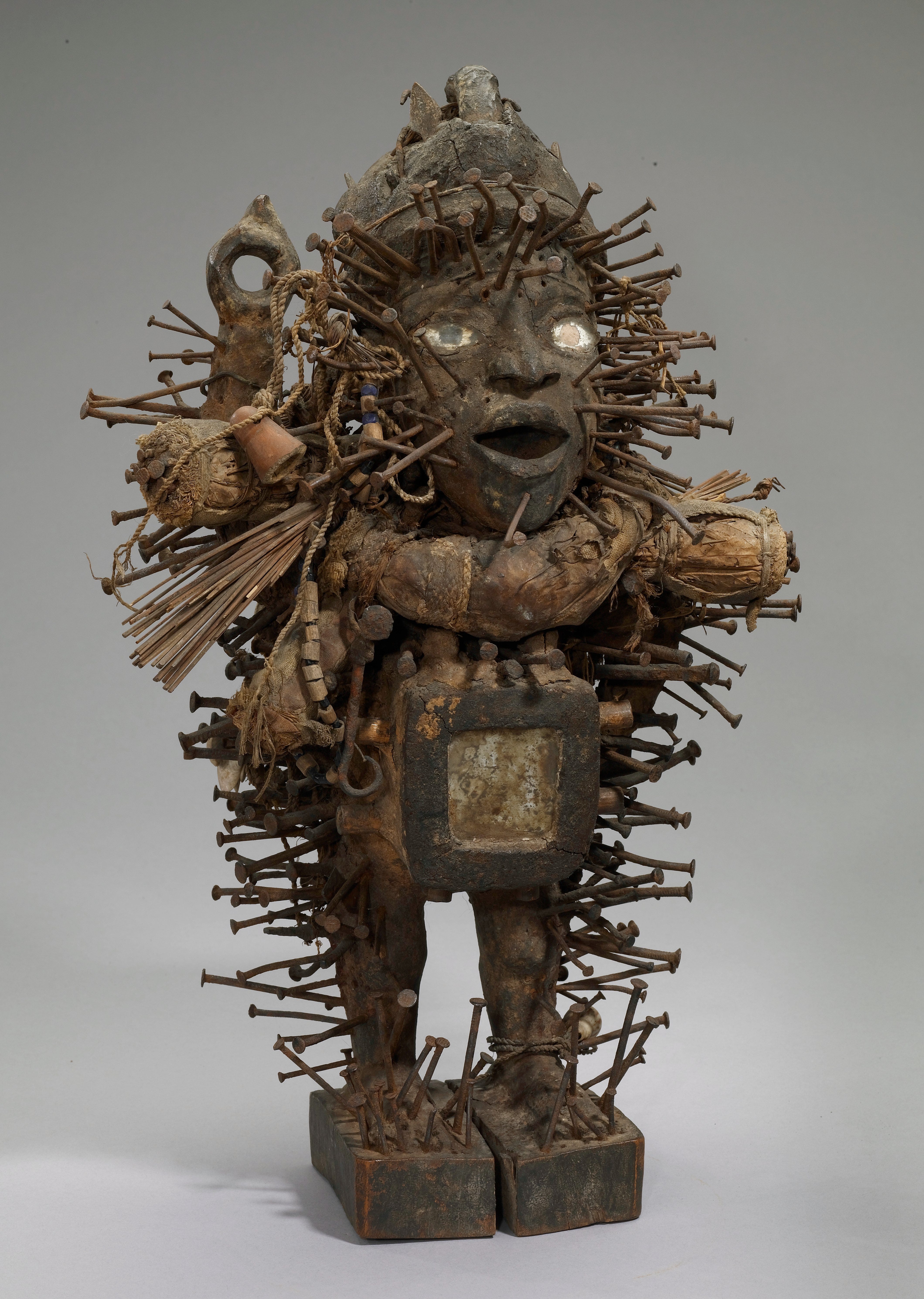
From Marx’s commodity fetishism to Freud’s study on object-based fixation, the term “fetish” is understood in much of modern social theory as the investment of animate qualities in inanimate objects. Its origin is a term given by Portuguese colonists to refer to spiritual objects in West Africa such as the Nkisi (plural: minkisi) from modern-day Congo. These minkisi’s apparently visceral powers are easily discerned: it’s hard to look at the exaggerated facial features and the profusion of nails and blades without feeling a twinge of sensation in one’s own skin.
The insertion of these sharp objects was, according to the Kongo people, the source and signal of its animate potency. But understanding minikisi solely in the realm of spirituality obscures their practical social function in maintaining justice and cohesion: they were often deployed to treat both bodily and social illnesses. Perhaps counterintuitively, the insertion of sharp objects does not signal violence; rather, the holes functioned as channels for the spirits dwelling within minkisi to dispense peace or punishment, or to ratify an oath. Nor were these figures “idols,” as early Europeans alleged; the minkisi objects were not equated to any specific god or spirit. What they were, and continue to be, is testament that the points of sensory access between the inner body and the outer world are what gives a being its vitality. This is where the spirit happens.
- Haena Chu
From the Trove
Long-form recommendations from the Friends of Attention’s collaborative Attention Trove archive
The Knowing Body
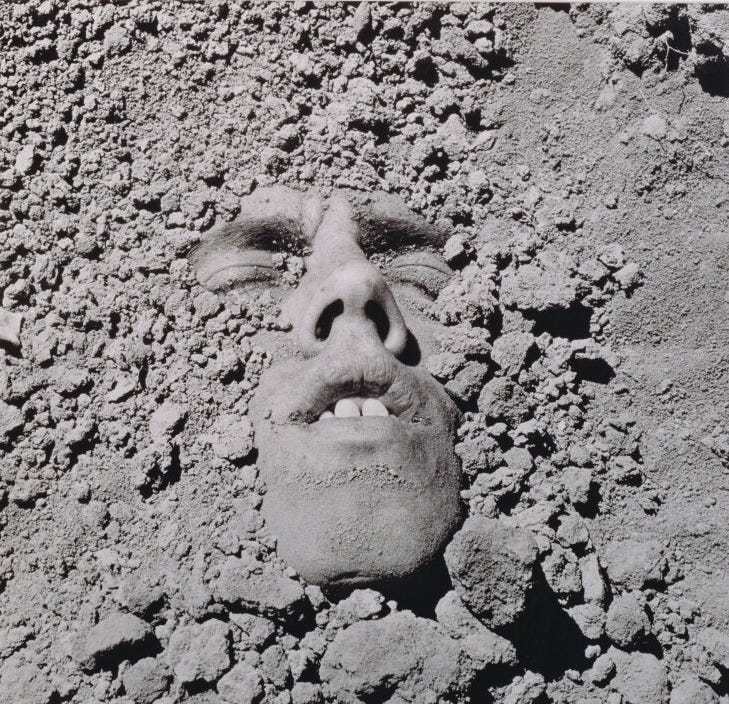
Felt Sense refers to a range of practices of “returning to the body,” practiced in the linked account as a way of producing and testing knowledge in the classroom. Coined by philosopher-psychologist Eugene Gendlin, the phrase indexes the constellation of bodily sensations associated with the body’s “knowing,” such as an inarticulable word being “on the tip of your tongue” or feeling like something is “off” before you know why. Bodies have a wealth of felt sense that complements the more cerebral, abstract forms of knowledge production. Felt sense is right there – and it’s routinely overlooked. But there are techniques to practice the careful waiting and internal listening to plumb its depths. Sondra Perl’s Felt Sense book offers exercises for writing by this internal compass. I teach felt sense in my writing classes, where students learn to brainstorm, draft, and revise by the body’s senses. Writing can be an embodied practice — in fact, it’s never anything but.
- David Landes
Stuff for Study: Scroll Meets Body
Readings and other resources for continued learning on attention and politics
How embodiment entwines us with the world, according to Merleau-Ponty — Dan Nixon for Aeon
The paradox of listening to our bodies — Jessica Wapner for The New Yorker
Experts on ASMR are soothing our existential anxieties — Laurence Scott for WIRED
Reclaiming matter as a living cosmos — Jackson Lears for The Baffler
Your phone is why you don’t feel sexy — Catherine Shannon on Substack
- Czarina Ramos

IRL
Sun, November 2nd: ATTENTION LAB: COALITION is an experiential, participatory workshop dedicated to the joint exploration of radical human attention with a focus on COALITION’s role in Attention Activism.
Mon, November 3rd: in our IRL seminar on GAMEWORLDS, participants will explore games’ unique power as a social technology, art form, and political tool. Led by video game writer and theater artist Hope Yoon.
Tue, November 11th: in our IRL seminar on THE ART OF INSTRUCTION, we’ll study the “text score” or “instruction piece” as it appears in contemporary art, mystical poetry, and avant-garde music. Led by performance artist and composer Nicholas Miller.
Find more workshops, events, and gatherings here!