

Friends!
Celebrities are curious attentional phenomena. As products of mass attentional exposure, they resemble iron ore magnetized by electric fields, containing and transmitting the very force that forms them. Celebrities seek attention, and they hide from it. Their attentional powers become events unto themselves (see: Pedro Pascal), and so do the spectacular nosedives that accompany the highwire act of coming-of-age in the tabloids (or, more recently, on TikTok).
What's curious about all of this is that, in addition to being phenomena, celebrities are also human beings. And strange things happen when human beings are collapsed into “phenomena.” This (sometimes lucrative, often dehumanizing) distortion is the subject of the present dispatch. For this week’s newsletter, we fill our cup at the weird shimmering cauldron in which personhood, idol worship, and irony alchemize with the emergent properties of an attention-fueled media machine.
In Stuff for Study, Czarina recommends a profile of YouTube star “Mr. Beast” (a human case study in the world-warping powers of the attention economy), a tour through the 19th century Irish roots of cancel culture, and a peek into the semi-ironic thickets of Unabomber "stan" TikTok. In Visions of Attention, Eleanor examines the symbolic flattening of Tommie Smith's and John Carlos's Black Power demonstration at the 1968 Mexico City Olympics. In From the Trove, David Landes surfaces Jonathan Beller's Marxist spin on the forms of attentional value that underpin the glamour of celebrity. For a longer meditation on fandom, we invite you to continue onto guest contributor and ethnomusicologist Jillian Marshall’s editorial on the iconography of the modern pop celebrity.
For our far-flung friends, enrollment is open for our flagship online course, ATTENTION ACTIVISM 101, which convenes on Thursday of this week. On the same evening, NYC neighbors can catch us at this week's gallery opening for EYES UP!, SoRA's upcoming exhibition on the role of poster art in Attention Activism.
Parasocially yours,
Peter Schmidt
Editor-in-Chief
Stuff for Study: Star power on the algorithmic internet
Readings and other resources for continued learning on attention and politics
Meet Mr. Beast, the Mozart of the attention economy – Mark O’Connor for The Guardian
Cancel culture as a form of attention – Wigs on the Green on Medium
The universal experience of online fame – Chris Hayes for The New Yorker
Tedpilled: Unabomber stan TikTok and its rejection of modernity – John Semley and Edward Millar for The Baffler
How fandoms built the internet as we know it – Kaitlyn Tiffany on Decoder with Nilay Patel
- Czarina Ramos
Visions of Attention
An archive of images and mini-essays on the myriad modes of attention
Olympic Iconography
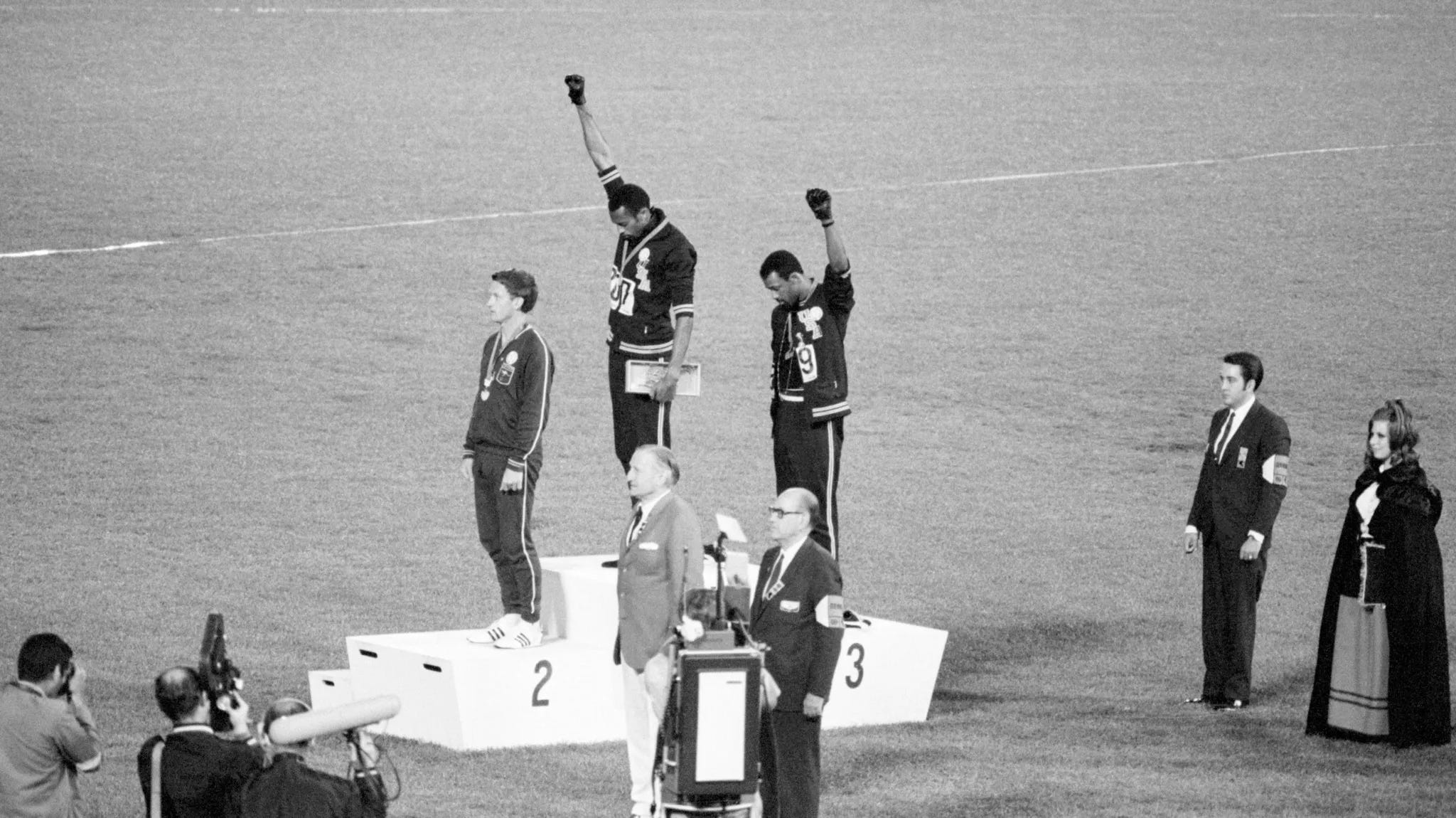
What does it mean to “use one’s platform”? While the phrase often evokes images of performative gestures on social media, track & field athletes Tommie Smith and John Carlos enacted a more literal interpretation at the 1968 Mexico City Olympics.
Standing atop the podium as gold and bronze medalists in the 200-meter dash, Smith and Carlos took off their shoes and donned beads, scarves, and one black glove – each detail a deliberate symbol of Black struggle and resistance. All three medalists, including Australian silver medalist Peter Norman, wore pins in support of the Olympic Projects for Human Rights, an organization of athletes that had formed to advocate for civil rights during the Olympic games. As the American national anthem began to play, Smith and Carlos raised their gloved fists to the sky.
For years, the U.S. had showcased Black athletes like Cassius Clay (Muhammad Ali) and Wilma Rudolph as emblems of racial progress, employing their image to export a polished vision of American virtue. But to Smith, Carlos, and the OPHR, this image-making was itself a kind of erasure: a way to obscure state violence and systemic racism behind a veneer of celebrity. Their gesture ruptured America’s self-mythologizing on the world stage, inviting attention to the truths their visibility was meant to obscure.
The consequences for Smith and Carlos were swift: expulsion from the Games, death threats, vilification in both media and the sporting world. While the spectacle of their athletic success was celebrated, their refusal to play the role assigned to them in America’s performance of progress was not (see the blacklisting of silent protestor Colin Kaepernick as evidence of this censorship's longevity).
Today, the image circulates widely, even repackaged by the Olympics as a notable fashion moment in Games history to signal the sporting event’s role in facilitating the march of progress. Even in its afterlife, the photo continues its double work of attention, reminding us not only of celebrity’s power to disrupt dominant narratives, but also of the institutional reabsorption that occurs seeking to turn such ruptures into safer, more palatable myths. That the image is now used to represent an America that would not – and did not – tolerate what Smith and Carlos actually did reveals the depth of institutional resistance to truth-telling, and the persistent power of the spotlight to either distort or illuminate what we see.
From the Trove
Long-form recommendations from the Friends of Attention’s collaborative Attention Trove archive
The Labor Theory of Image Capital
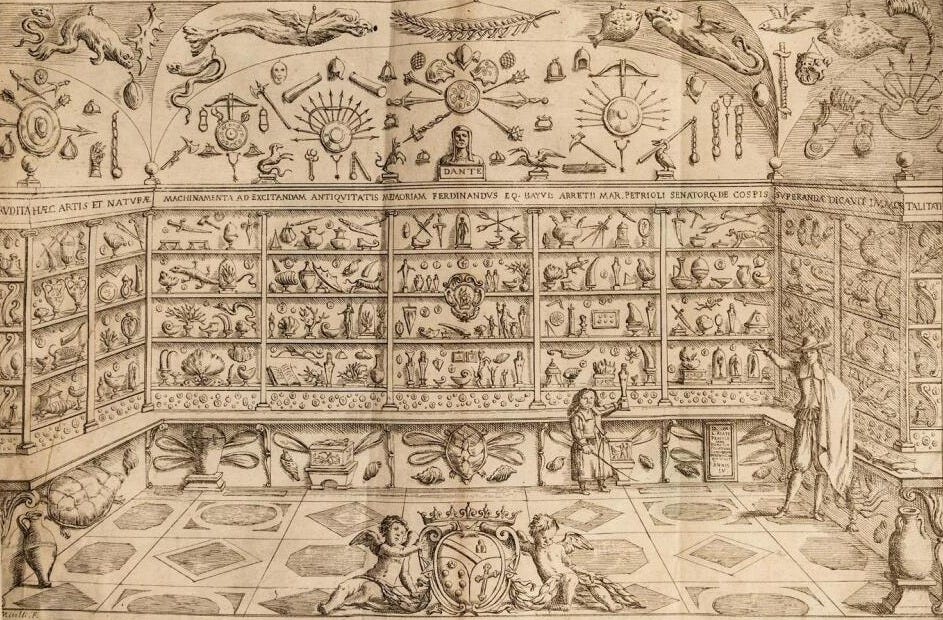
Jonathan Beller’s Informatic Labor in the Age of Computational Capital is an indispensable conceptualization of attentional labor as a driving force of contemporary celebritydom. Beller explains the attention economy’s mechanisms for converting attention into value, which is not accomplished through proxies such as ads, but directly through ubiquitous attention technologies that measure, and thus monetize, acts of looking.
Drawing from Marx’s labor theory of value, Beller updates the model to include the immaterial labor of images. Marx’s formula of capital accumulation, best summarized as M-C-M’ (money-commodity-money), proposes that the surplus value of a commodity grows during the exchange process, in which surplus value (M’) is generated by extracting unpaid labor from workers. Beller proposes a modified formula, M-I-C-I’-M’, to consider the valorization of the image (I) by attention as a factor in generating value.
Beller’s essay draws from his earlier work, The Cinematic Mode of Production, and continues further in his book, The World Computer: Derivative Conditions of Racial Capitalism, which conceptualizes the computational mode of production and further elaborates M-I-C-I'-M' as “the Programmable Image of Photo-Capital.”
- David Landes

IRL
Wed, July 23rd: CLOWNING, our in-person seminar on the ancient art (and contemporary practice) of “becoming the clown.”
Thu, July 24th: ATTENTION ACTIVISM 101, our virtual seminar that studies the intellectual and practical foundations of the nascent Attention Activism movement.
Sat, July 26th: ATTENTION LAB: COALITION. Our Attention Labs introduce participants to the three pillars of Attention Activism: STUDY, SANCTUARY, and COALITION.
Mon, August 4th: ATTENTION LAB: STUDY
Mon, August 4th - Sat, August 9th: POLITICS OF ATTENTION. Our week-long writing and research residency. APPLY HERE! (Deadline extended July 18th)
Find more workshops, events, and gatherings here!