

Friends!
What separates humans from animals? According to philosopher Harry Frankfurt, it’s our capacity not only to want things (ice cream, sex, vacation) but also to want to want things (to read more books, to exercise more regularly, to be more politically engaged). He calls this latter kind of wanting “second-order desire.” Our “first-order” desires are the ones that tend to guide our impulses; our second-order desires seek to change them.
Second-order desires aren’t always fulfilled (ask most people around January 31st how their New Years resolutions are going), but in the best of cases, they are the means by which we shape ourselves and the ways that we behave in the world. That’s the principle behind Gayatri Spivak’s claim that education is “the non-coercive rearrangement of desire.” Experiences of teaching and learning can give people the tools to satisfy their second-order desires by rearranging their first-order desires. This is education as self-formation.
Human fracking hijacks the wiring of our first-order desires at the expense of our second-order desires. We want not to be scrolling headlines all morning, but some knee-jerk reflex keeps our thumb on the screen. We want a healthy democracy, but it feels impossible not to blame “the other side.” Frankfurt’s notion of “second-order desire” becomes especially useful when our second-order and first-order desires fall so wildly out of whack. It’s especially urgent, too: our ability to want (first order) what we want to want (second order) is nothing less than the ability to choose who and how we are in the world. It’s the basis of our freedom.
This week, we’re writing about DESIRE. In Visions of Attention, Haena surfaces Austrian artist VALIE EXPORT’s “expanded cinema” performances, which staged acts of anti-cinematic desire in public spaces. Phil Nguyen meditates on an itch in Practice in Practice, while Czarina shares readings on eroticism, psychoanalysis, and AI-generated romantic fiction in Stuff for Study. Finally, in IRL, we invite you to our upcoming seminar on SIMONE WEIL, one of the great thinkers (and practitioners) of human attention in the twentieth century.
Libidinally yours,
Peter Schmidt
Editor-in-Chief
Visions of Attention
An archive of images and mini-essays on the myriad modes of attention
Tap and Touch
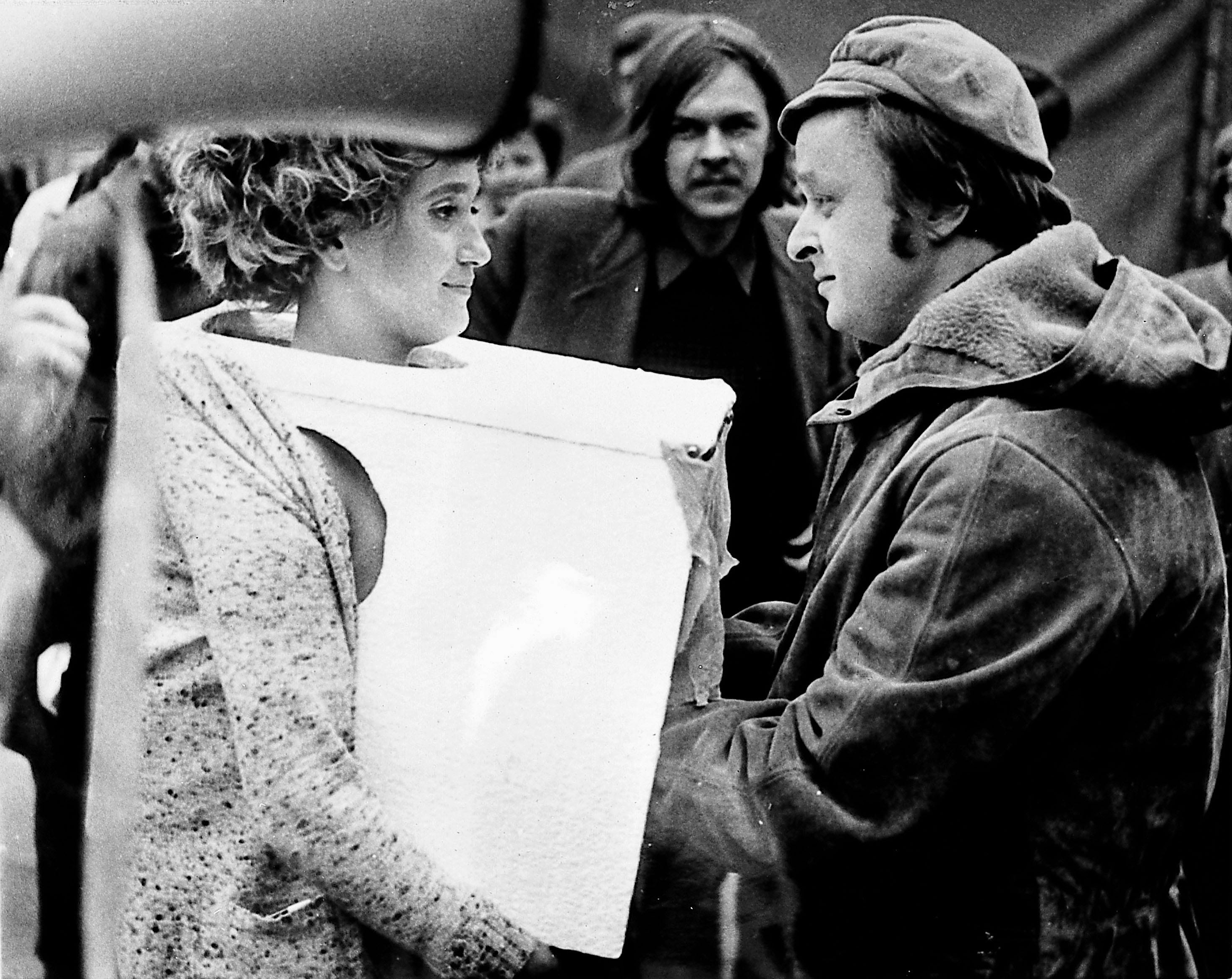
Does cinema produce desire or portray it? Austrian artist VALIE EXPORT short-circuits this question through “expanded cinema,” a kind of performance in which the attentional dynamics of cinema are staged beyond the screen. What characterizes cinema in her work is not the materiality of camera and celluloid but its orchestration of a distanced yet intimate form of address.
TAPP und TASTKINO (TAP and TOUCH CINEMA) is one of the best known examples of her intervention. Standing in the streets of Vienna, she donned a bulky square box on her torso, inviting strangers to put their hands in the two holes in the box to touch her breasts. Unlike other provocative performances such as Aktionshose: Genitalpanik (Action Pants: Genital Panic) in which she flashed her pubic hair through a strategic slash in her jeans, the sexualized parts of EXPORT’s body were not readily visible. Cleverly disguised by curtains draped on the two holes, this mini-cinema of the artist’s body inverted the colloquial directive to “look, but don’t touch.” And if one considered why this experience was so jarring, bitterly comical, or unsettling in some other manner, it would reveal how much of cinematic desire is usually communicated through vision as it merely insinuates, but continues to defer, the possibility of touch.
It is not merely that the female body is objectified through cinema — the female body is rendered cinematic. It is the site where power is exchanged and where the theater of selective concealment and revelation unfolds. VALIE EXPORT’s callout of this fact using her own body puts her in a box for the moment — but EXPORT’s cheeky smile in the photo documentation of TAPP und TASTKINO suggests that she’s in on the act.
— Haena Chu
Practice in Practice
Reflections on experiments in Attention Activism
An Itch of the Mind
Recently, while on a walk around a campsite in Massachusetts, I was stung by a wasp. Waves of pain radiated from the locus of a tiny red dot on my index finger, forcing me away from the company of a familiar loneliness. Bullseye. The demonic little bugger had found its mark.
Back at camp, my mind did what minds do best: it began generating stories of what had happened. I began to worry that I wouldn’t be able to rock climb with my friends and my partner anymore, the original plan for the trip. I pondered what it’d be like to play my guitar with three fingers when I came back home.
And then, slowly, as those around me attended to my swelling appendage with tubes of antihistamine, I turned my attention to the pain itself. This might seem like a perverse thing to do but, being a longtime meditator, I wanted to know what I was really experiencing as “pain.” Put another way, how did I know I was in pain? What was the word “pain” abstracting me from?
When I set about doing this, I came into closer contact with the sensations I was experiencing: an intense but intermittent throbbing across the pulp of my index finger, and a strange sense of my elbow and my hand being tied together by a thin throughline. My finger started to feel less like a contained, centralized object within the locality of my body than an oceanic net of lively vibrations.
Eventually, all of this gave way to something more uniform, i.e. that of a persistent itch. It accompanied me up the rocks (I did end up climbing) and into my sleeping bag. It followed me back to Brooklyn the next day. I tried concentrating on it, both to divert myself from the instinct to scratch and to divide the itch into its constituent sensations, but my impulses got the better of me.
I clawed at my finger, despite knowing that it would only worsen the itch. And this, too, presented itself as a Buddhist lesson in real-time: namely, that itches always want to be scratched, and that there are many ways to scratch them, some better than others. My itch, thankfully, has found its way here, to your attention, in the form of digital ink.
— Phil Nguyen
SoRA community member
Stuff for Study: Wish Lists
Readings and other resources for continued learning on attention and politics
Snarge, the animal casualties of our insatiable desire for acceleration — Gary Kroll for Aeon
Indifference and the death of desire in psychoanalysis — Michelle Rada for Parapraxis
Internet surveillance has killed eroticism — Kate Wagner for Lux Magazine
The A.I. romance factory producing infinitely customizable genre fiction — Vauhini Vara for Bloomberg
Welcome to the age of decadence without pleasure — Michèle Mendelssohn and Charlie Tyson for The Guardian
Culture war as imitation game: On René Girard’s mimetic desire — Luke Burgis for The New Atlantis
— Czarina Ramos
IRL
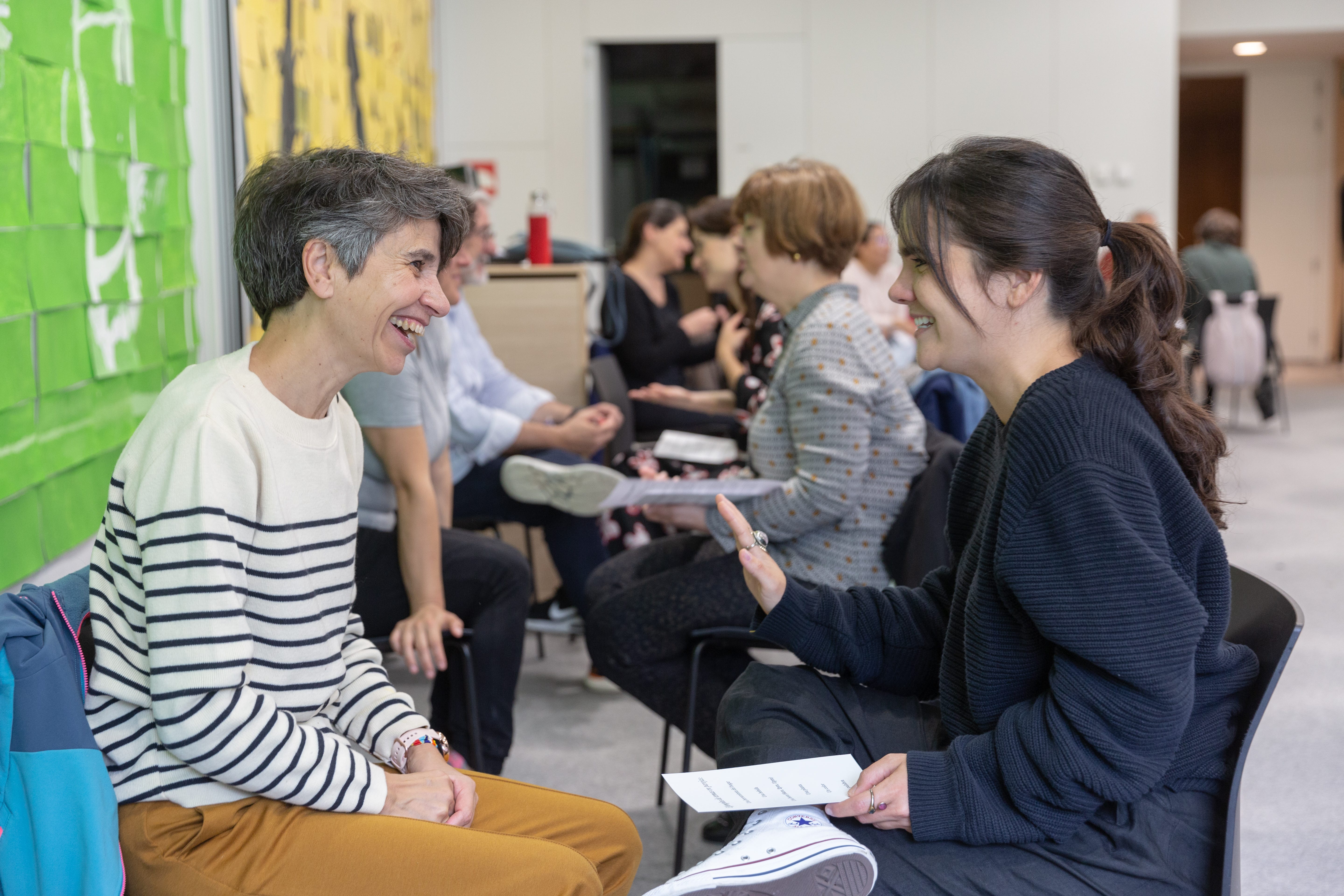
Wed, August 12th: Join us for our IRL seminar on SIMONE WEIL, one of the twentieth century’s most uncompromising philosophers of attention. Enroll HERE!
Sat, August 15th: ATTENTION LAB: COALITION is a participatory workshop dedicated to the joint exploration of radical human attention. Sign up HERE!
Find more workshops, events, and gatherings HERE!