

Dear Friends,
Let’s clear this up right away, since there has been, at different moments, and in various discursive corners, some confusion on this issue: here at the School of Radical Attention, we are not anti-tech.
Quite the contrary. We think that the technologies that have emerged over the past twenty years are super cool! They enable a degree of connectivity that was unimaginable even fifty years ago, and have transformed nearly every face of human existence in ways that require us, over and over, to rewrite the human story anew.
(For a taste of our qualified technophilia, see our co-founder D. Graham Burnett's essay in the New Yorker on the pedagogical possibilities of AI).
No. We are not anti-tech; what we are is anti-exploitation. And the fact is that the technologies that now produce the baseline conditions for human life in the twenty-first century have been tailored to the designs of an exploitative eyeball economy that is simply bad for humans. It will take some serious work — technical work, to be sure, but also work of the imagination — to disentangle the tech we have from the forms of exploitation that the tech engenders. But it is possible! And we must believe in that possibility! This is the spirit of digital utopianism.
That's what we’re up to in this week's dispatch. In Stuff for Study, Vitória highlights Chile's revolutionary ambitions of cybernetic socialism and the promises of Afrofuturist dreaming. In Visions of Attention, Haena meditates on the internet musical subgenre vaporwave as a sonic expression of a digital utopia flowering ceaselessly from the dark loam of digital obsolescence. And in From the Trove, David shares an interview with technologist and writer Cory Doctorow on practical, common-sense measures that can get us from our present tech oligarchy to a digital future worth fighting for.
Of course, we are humans with bodies, and bodies exist in three dimensions, and a digital utopia that is only ever digital is no utopia at all. That's why so much of what we do at SoRA is about getting people together in physical space. So if you’re in NYC, or passing through this summer, our IRL section (below) will orient you to some of the amazing events we have coming up in our Dumbo Sanctuary.
Join us! Near or far! In two dimensions, and in three! But always, always with the belief that the future can be beautiful, and that it can be ours, together.
Hopefully yours,
Peter Schmidt
Editor-in-Chief
Stuff for Study: Digital Utopias
Readings and other resources for continued learning on attention and politics
Chile’s radical experiment in cybernetic socialism — Eden Medina for the MIT Press Reader
Can we find utopia by rejecting the dreams of tech companies? — Jathan Sadowski for Real Life
Brazil and Colombia’s insurgent community networks — Vivian Newman Pont, Vanessa López, and Juliana Fonteles da Silveira for Dejustica
How Afrofuturism can help us imagine futures worth living in — Lonny Avi Brooks and Reynaldo Anderson for the Guardian
Mexico’s subversive digital zapatismo — [ANTI-MATERIA]
- Vitória Oliveira
Visions of Attention
An archive of images and mini-essays on the myriad modes of attention
vaporwave u t o p i a n i s m
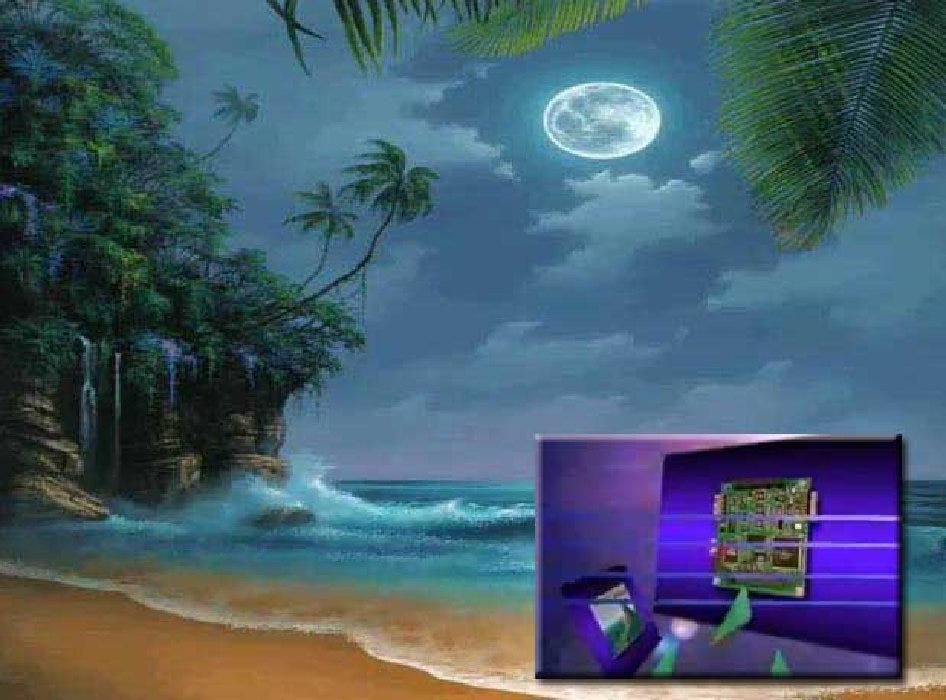
In the 2000s, a new musical microgenre known as vaporwave emerged from the pairing of chopped and “paul stretched” samples of jazz and synth pop with a highly specific visual aesthetic that drew on 1990s digital culture: saturated images of dolphins, greek statues, and glyphs of Japanese characters. Without a clear community of originators, cult favorites like nobody here and Clear Skies Through The Mall Skylight grew exclusively out of the Internet: produced by often anonymous individual creators, disseminated through Youtube and bandcamp, and circulated through tumblr and Pinterest across chains of reposts and re-edits.
Vaporwave became the utopian expression of a generation who remembered their own youth and past primarily through the shared use of consumer products — CD-ROMs, the glitches and pixelated displays of now-defunct OS programs, Lisa Frank notebooks, cyberpunk video games, the soft muzak of 80’s corporate advertisements. Amid the ongoing dematerialization driven by popular technology, these became media artifacts of a lost past that, in retrospect, appeared more… humane.
As much as they purport to project forward into the future, utopian visions from Eden to the “noble savage” stereotype have relied on nostalgia for a reimagined (or newly imagined) past. In vaporwave, this longed-for past is located ever-closer to the present – as artifacts of digital culture become obsolete with unprecedented speed. It is the music of an internet where every image and gesture is always already consigned to oblivion. The sonic hollowness of vaporwave conjured an endless echoing hall of these recent relics. But it isn’t all melancholy: vaporwave reminds us that the past is, after all, produced; that disappearance is always a creative act. What’s more utopian than the promise that the world can be made anew?
- Haena Chu
From the Trove
Long-form recommendations from the Friends of Attention’s collaborative Attention Trove archive
Technological Self-Determination
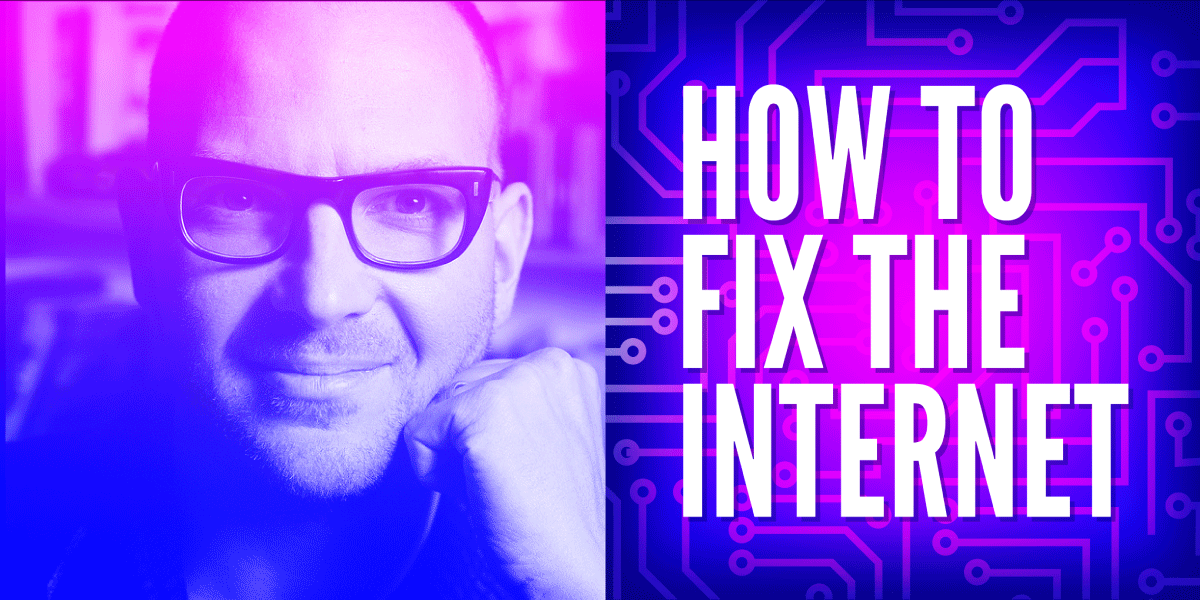
Sci-fi writer and tech commentator Cory Doctorow authored The Internet Con: Seize the Means of Computation, which outlines the “enshittification” of the internet and provides a disassembly manual for the worst of Big Tech. In this interview with The Electronic Frontier Foundation, a nonprofit dedicated to defending digital privacy, Doctorow discusses how to divert the internet from our current moment’s monopolistic tendencies. Routes to a better future include re-legalizing interoperability, establishing “right to repair” laws, and creatively advancing technological self-determination, the right to decide what tools we use (e.g., ad blockers). There is additional promise for reviving competition from recent upticks in antitrust regulation, privacy laws, and unionization of the tech workforce. These fights will determine the future of mass attention and the political economy of attentional technologies.
- David Landes
IRL
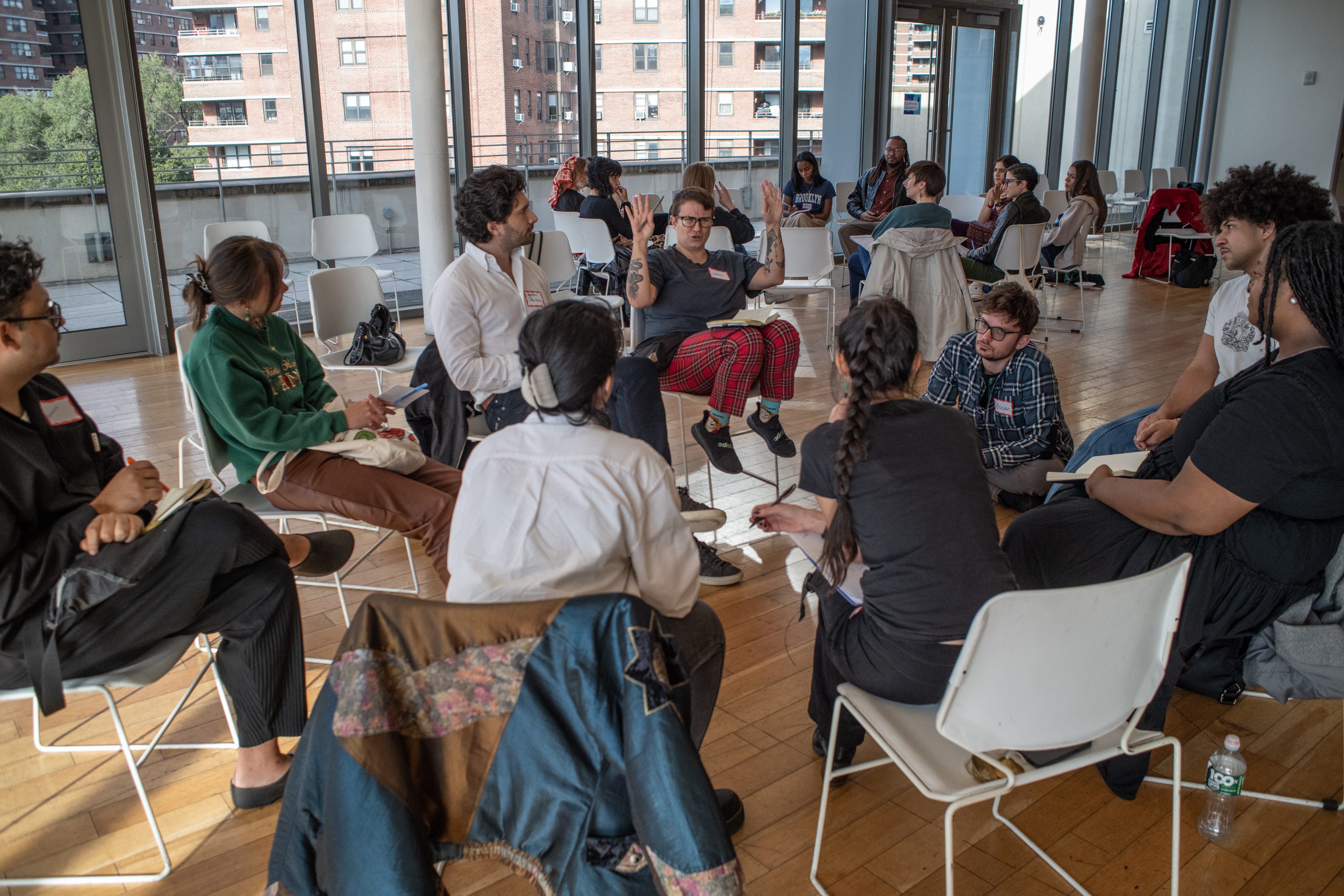
A rundown of what’s up at the Strother School of Radical Attention in Brooklyn
Wed, May 28: Educators for Attention Meeting
Wed, June 4: Slow Cinema seminar begins!
Thu, June 5: Attention Lab: STUDY
Fri, June 6: SoRA All-Nighter: Jazz Studies with The Empty Cup’s own David Landes
Our summer seminars are also open for enrollment! Engage in longform study of creatures, pop fandoms, weaving and other intellectual fascinations at our SoRA sanctuary.
And! SoRA’s second annual SUMMER YOUTH ACADEMY runs from June 23-27. To find out more, email [email protected] with the subject line SUMMER ACADEMY.
Find more workshops, events, and gatherings here!
Love Vaporwave and love this reading of it. It’s conflicting to enjoy a utopian vision that’s based mostly on a shared consumer memory, and I can’t always tell if the call center corporate jazz and classical statues are aspirational or mere ruins. Mostly, I think vaporwave acts as a sonic memory system for rediscovering what digital hope feels like. Thanks!
Thank you so much for this update! I am sad that the 6/6 Jazz event has sold out. Hopeful that we can see another offering this summer.