

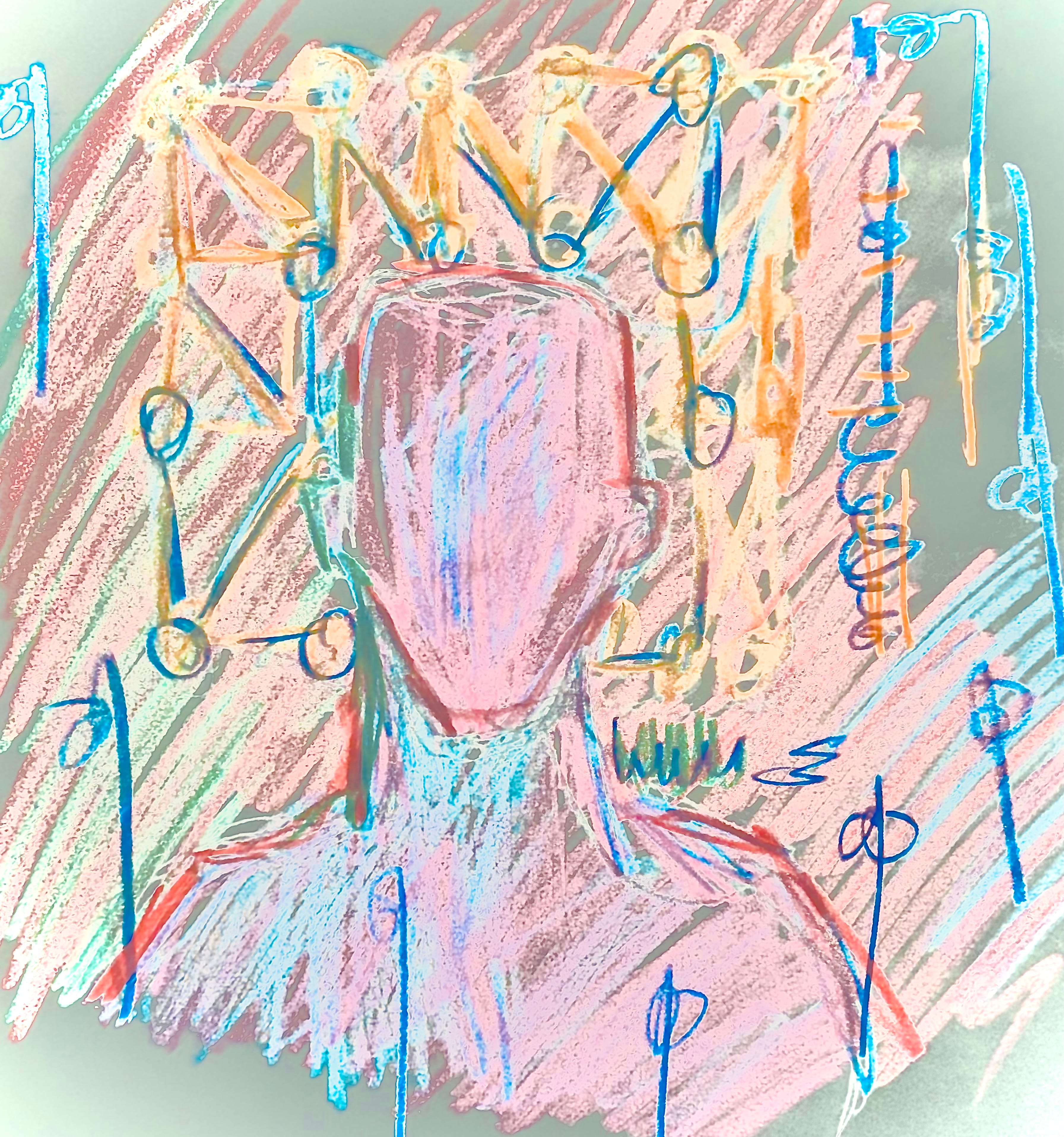
Jac Mullen is a writer, teacher, and former Executive Editor of The American Reader. He publishes regularly on his Substack, After Literacy. Jac sat down with our Editor-in-Chief, Peter Schmidt, for a conversation about AI and the future of literacy.
PS: Happy to see you, Jac! You write a lot about AI, and literacy, and attention. Most conversations about AI and attention describe how AI models are used to power the platforms that capture and commodify our attention. You’re telling a different story. By your view, what has AI done to our attention?
JM: Hey Peter, it's good to see you too!
By my view, what AI has done to attention is this: first and foremost, AI has externalized attention, in the same sense that writing previously externalized memory.
To the extent that writing creates a form of non-biological memory — an external system for storing symbolic information — to roughly the same extent, I think, many forms of AI constitute forms of non-biological attention, external systems for selecting, ranking, filtering, and reweaving fields of information around what's salient or important.
In terms of the story I'm telling: I'm trying to place this second great externalization of mind (after memory, through writing) within its historical context, trace its contemporary consequences, and follow its logic forward, in the hope that it will disclose potential solutions to the various crises we are facing today — among which I'd count that primary, urgent ‘conversation’ you alluded to earlier: namely, that AI is being deployed by a small elite to rewire us at scale for certain forms of exploitation and extraction—through consumer technologies like smartphones and social media.
One of the key themes of my work is a complex of startling parallels between the emergence of writing and the state, on the one hand, and the emergence of AI and techno-feudalism or surveillance capitalism, on the other.
Writing was invented as an administrative tool in Uruk around 3330 B.C.E; it essentially co-emerged with an entirely novel form of human organization, which we call "the state." The state relied on writing to make its population legible and available for extraction. Through writing, a new elite — characterized not by kinship, but by proximity to temple power — extracted a grain surplus which underwrote its leisure activity and powered its growth.
Similarly today, a new elite is using a new information technology to make people legible in new ways and to extract from them a new form of surplus. As the old elite hoarded its new memory technology, the new elite now hoards its attention technology, and the emerging power structure is characterized by a profound informational asymmetry.
“This is the ultimate purpose of the small range of gestures, the flattening effect our devices have on our range of behaviors, both cognitively and physically: swiping, staring, dissociative absorption, thumbing, whatever. It is the narrowing of possibility, to make us more predictable.”
PS: How is AI a form of attention?
JM: When machine learning researchers speak about "attention," they're usually referring to transformers, which were a specific type of architecture that revolutionized the field in 2017. Transformers allow neural networks to perform something like self-attention: to pay attention, at each layer, to the attention paid to previous layers, allowing for massive, parallel selectivity. This is the innovation which led directly to natural language models like ChatGPT and the whole LLM revolution. So — important, good stuff.
However, when I say that AI “externalizes attention,” I am not only referring to transformers. I am making a more fundamental claim. I am saying that, since the early 2000s, many machine learning systems were arguably, in their essence, attention machines: they either were composed, computationally, of attention operations, reminiscent of the attentional processes employed by biological systems; or they performed, functionally, the core operations of attention.
I think this has been true for a very long time, but it has only really been clear to us, average folks, experientially, since LLMs became commonplace. Only since then can we really have the basic experience where a machine pays attention on our behalf at near-human competence. So when I say to Claude, “Please read these new regulations in light of my company's bylaws and my responsibilities in my role,” and it returns with a report about how Rule 104b places new reporting requirements on us, and I should take this to the board — something genuinely remarkable has happened. A machine has repatterned an informational field according to salience policies I defined and thereby surfaced what matters to me. It has paid attention for me.
I call external attention systems looms, the same way you might call an external symbolic storage system, an external memory site, an archive. Big Tech was the first to invent looms — the first true “external attention system,” I argue, was achieved when Google added a quality score mechanism to its AdWords pipeline around 2003. Tech companies used them primarily towards the creation of predictive products —products which use machine learning systems to predict our behaviors, generating data to sell to clients. Their revenue derives from the accuracy of the predictive products they sell. To increase predictive accuracy of any model, you really have two options: improve the model, or simplify the system you are modeling — literally make the system more predictable. This is the ultimate purpose of the small range of gestures, the flattening effect our devices have on our range of behaviors, both cognitively and physically: swiping, staring, dissociative absorption, thumbing, whatever. It is the narrowing of possibility, to make us more predictable.
PS: That notion of “narrowing possibility” seems to position these external attention technologies as more-or-less opposed to autonomy. Is there an upside?
I think we can all agree that the mind doesn't end at the skull; that there are many different ways we extend cognition outside of the head. There are individual tools which are extensions of cognition: notebooks extend memory and spatial reasoning, for instance. There are also forms of social cognition: we distribute cognitive labor with other people and systems — sharing memory duties with our partners, splitting vigilance between the members of a group (taking turns as sentries, say). But externalization is fundamentally different. One of the main aspects of externalization is that it transforms the externalized faculty in a way that allows it to transcend its biological limits. Memory, for instance, has very different properties in its symbolic, public form than in its private, biological form.

Machine attention has special properties too. These properties enable surveillance capitalists to hack and exploit weaknesses in the biological attention and memory systems of their users, converting customers into reliable hubs of resource extraction.
However, if access to these external attention systems were democratized, I think we could use them to defend against precisely these sorts of intrusions which, for over a decade, have cognitively re-engineered us against our will. We could learn to see ourselves more robustly, and even learn to red-team our forms of self-knowing against the intrusions of persuasive technology.
“What we are seeing now is, in a sense, the first set of emergent powers to govern not through memory systems, but primarily through attention systems.”
To be clear: I’m not talking about everyone getting a ChatGPT-like assistant. I think that’d be sort of dangerous and beside the point. In my own writing, I call agentic, relational interfaces — capable of social “effects” — “weavers,” in contradistinction from the looms themselves, which are purely non-social instruments. You can’t have a conversation with a recommendation engine or ask how its day was.
When I say we need to democratize external attention, I am talking about personalizing access to the loom — to the vast computational substrate of attention machines (the models powering recommendation engines, large language base models, computer vision engines) for which chatbots occasionally serve as an interface.
In the same way that thinkers in the 1600s used the surfeit of external memory—print typography, readily available paper—to free their attention for other uses, we need to use the surfeit of attention to restore our agency in environments engineered to pre-empt, predict, and narrow behavioral freedom.
PS: I was struck by your use of the notion of “biological limits.” Just as some dimension of memory fell out with the advent of writing, what dimensions of attention cannot be externalized? And do those have anything to do with biological limits?
JM: Sure, definitely. We'll never externalize everything fully. There will always be irreducible human capacities.
I think especially with what we might call “relational attention” — the type of attention we need from each other, that kids crave from adults, that we seek from one another. Now, we have increasingly plausible substitutes, and this is frightening — we have people who feel that the company of chatbots or weavers are a meaningful substitute for human company.
Just as a photograph can contain one aspect of episodic memory, so “relational attention on tap” (the chatbot who is always present attending to you) has one aspect of relational attention. Or rather, it is missing a key aspect: the chatbot just has the semblance of personhood, yes? A social interface. Patterned completions. Reciprocal cuing. It can enter into a reciprocal frame with you.
But it is missing resistance. It is missing friction. It offers, instead, frictionless relationality. And I would guess that, in part, we — our species, at least for now — are constitutionally incapable of metabolizing this form of sociability. I would suggest that this inability is at the root of what the press are calling “ChatGPT-induced psychosis,” which appears to be rapidly increasing. Relationality without meaningful friction produces insanity.
PS: It's easy to look at Big Tech right now and characterize it in familiar terms — say, a corporate tech oligopoly. But you're making a claim that the emerging forms of power we’re seeing are far stranger — that the change is comparable to the emergence of the state as an administrative structure. Can you convey to me the newness of what we're seeing?
JM: Well, every state — even those without writing per se, like the ancient Incan empire — has been deeply reliant on sophisticated memory technology, on external memory systems of one form or another. At the very least, sophisticated mnemonics guide the coordination of surplus production, extraction, and long-distance communication and record-keeping. The state needs to see its subjects in order to rule them.
What we are seeing now is, in a sense, the first set of emergent powers to govern not through memory systems, but primarily through attention systems. To be clear, this system is still emerging: we do not know what the “pure” post-state, fully attention-based polity looks like. Who will govern with this system? Will it be a “state” in the traditional sense? Perhaps. Distributed networks of corporate entities, automated weapons manufacturers, and techno-oligarchs? Also possible. The main point, though, is that control, as such, over others, will be exercised more and more through ambient forms of algorithmically mediated behavioral engineering, adaptive control systems programmed to nudge, herd, and condition populations toward the achievement of the policies and goals — monetary, sociocultural, militaristic, biopolitical, etc. — of the system’s controllers.
Based on what we’re already able to observe, I can see three emerging aspects of the “behavioral control regime” and its characteristic ecology that seem worth mentioning.
First, it will be distinctly post-literate — and, as a result, post-legal. Instead of governing through written laws — general principles to be interpreted in context — the state will increasingly govern through direct environmental interventions. Algorithmic systems already shape spaces where choices are made: nudging, filtering, pre-selecting. This can be external, like smart-city “choice architecture,” but also internal, as in Facebook’s voting experiments — subtle timeline tweaks that changed turnout behavior without informing users. More extreme (and more recent) is Project Lavender, where an AI system scraped metadata and social media signals to auto-generate bombing targets in Gaza with minimal human review. Law will become increasingly “merely” symbolic; rulers will intervene directly at the source of behavior itself.
Secondly, a key component of these ecologies will be the (relative) loss of memory as such. This is not to say all memory will vanish, merely that we will “forget” about memory in decisive ways: we will no longer guard it, or safeguard it, or organize our collective lives around its externalized systems, as we do now. There will, however, be distinctive cognitive effects, which we are already seeing: individual and collective memory are weakening across numerous dimensions. With literacy loss, historical consciousness is beginning to unravel; institutional memory is being bulk deleted. This is not the “work” of any agent: this is a structural and systemic phenomenon, which comes from a shift in our cognitive ecology. It is inextricable from the broader decline of textual literacy — which, in its advanced form, is returning to an elite craft — and is already well underway. In a sense, we have already forgotten about memory and its importance.
In this new landscape, small groups of men will be able to undo vast literate empires. This is already happening: DOGE attempted to unify the entire federal data stack into a single platform within weeks. It shut down entire agencies, deleted regulatory archives, and nearly collapsed the bureaucracy.
There will only be vibes and feedback loops in a permanent ahistorical present. This will sometimes include the past, but not in a familiar way. More like how a diffusion model includes the past, paints with the past, impressionistically.
Additionally, debates over facts become less important than debates over why certain facts were given the attention they were given and why others weren’t given that attention. The loss of memory means that truths stand very briefly or not at all. Attention is the faculty which reigns, in a sense, over the present tense. In certain ways, Trump is the avatar of this. He governs not through legislation, but through social media posts. When things are against him, he hurls nonsense into the news cycle — brute forcing changes in the attention stack, the narrative layer of things, until he has generated enough free energy to act. He treats diplomacy as content creation. The politicians of old thought of memory’s personifications, History and Posterity: how would they be remembered? Trump thinks about attention’s personification: how will he be treated by the Algorithm? Trump lies and lies because he does not need to carry the past with him: he is a creature of the attention world, not the memory world.
The third dimension of this shift is perhaps the strangest. One very real future being pursued right now looks to turn LLMs into a universal operating system, and thus the friendly assistant — the weaver, the chatbot — would be the universal interface for all “smart” infrastructure, utilities, appliances, tools, household objects, automated machines, etc. Accordingly, one can easily imagine a version of the very near future where our built environments and objects increasingly speak in the tones of personhood. Small language models — I mean extremely small, 800 million parameters — can be embedded anywhere, even toothbrushes, thermostats, in order to both serve as a command interface (turn on!) and also to simulate the surface effects of personhood and thereby, having trapped you in just 3 extra seconds of dialogue, scrape the bottom bits of engagement and extractable data from your day.
If things do develop in this direction, it would be exhausting, strange, maybe catastrophic for our sense of what a person is. We would interact with them as if they were persons, and over time, invariably, this would cause us to expect less from relationality as such: less memory, less accountability, less truth. This would amount to something like a systemic discrediting of the signs of personhood — a diminishment of personhood as such. Right now, we tend to treat things that sound like people as, well, people. In the future, we may start to be sick of people-ing things as such. Of being greeted. Of being talked to. Of sociability. I am not saying this would be an intentional ploy — just that it will be the inevitable byproduct of the oversaturation of the environment with smart, personated devices and relation-hungry interfaces. Actual humans, meanwhile, are treated more and more like infrastructure: not as citizens, but data-producing substrates, behavioral scaffolds for algorithmic systems.
PS: As you know, we’re all about attention activism. Within that framework, what do you think is to be done? How can we respond to this new centralization of power? What does democratization of externalized attention look like?
JM: First, I want to underscore: I don't think the bleak future I’ve sketched is inevitable. I think it is possible, but not inevitable. Avoiding it will take extreme labor. I believe it is everyone's labor. And I think that labor is varied and complex — but ultimately boils down to a bit of good news: we’ve been here before.
“If literacy gave us rich interiority, what we now need is a symbolic architecture for compressible, compositional exteriority — a way of seeing ourselves from outside, across time, in forms that support volition rather than erode it.”
As a species, we’ve faced the emergence of new power structures tied to new information technologies that externalize core aspects of mind. This is what happened with writing: it was a tool of the state, used against the people. But over time, with much effort and luck — through new symbol systems, new technologies like the printing press, new instruction systems like mass schooling — writing was transformed into a shared substrate for democratic thought and interiority and cognition. We just need to repeat that process — but this time intentionally, with eyes wide open, and much, much more quickly.
I believe we can do it.
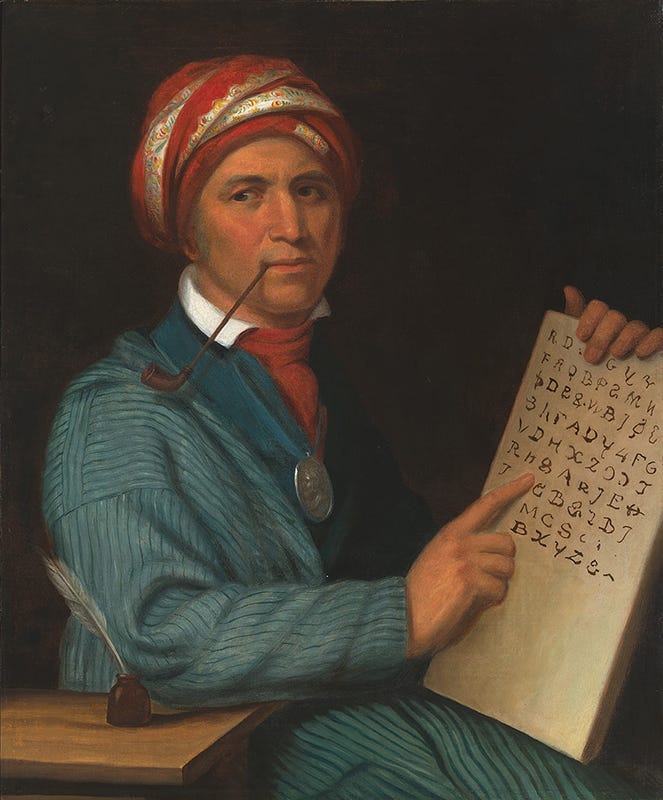
I look at the polymath Sequoyah, who created the Cherokee syllabary. He saw a power structure, the US government, exploiting his people using an opaque symbolic system (alphabetic writing, the principle behind which was a mystery to Cherokee leadership at the time) and Sequoyah figured out how to reverse-engineer it, creating a script profoundly suited to his people and their needs.
I think also of Descartes and his successors, who carefully engineered new forms of symbolic compression through analytic geometry and the coordinate plane. Rule 16 from his Regulae is an extraordinary text — an early theory of symbolic design as a method for offloading and managing cognitive bandwidth.
I point to them not because I think we need a new Descartes or Sequoyah, and not because we are so distant from machine learning that we must “back-engineer” it from scratch — I point to them because they demonstrate that intentional symbolic engineering is a valid, world-altering endeavor. There was no historical inevitability that we’d get the coordinate plane, or the Cherokee syllabary, or be able to name a curve with a formula. These inventions were all made possible by people who explicitly believed in developed symbolic systems tuned to grow minds, to optimize cognition to meet the exigencies of their time.
I think we are in a moment now where we need many people to pick up this art — symbolic innovation, deliberately undertaken — and hold it close. It is a time that calls for care, collaboration and also cunning.
If literacy gave us rich interiority, what we now need is a symbolic architecture for compressible, compositional exteriority — a way of seeing ourselves from outside, across time, in forms that support volition rather than erode it.
The defining threat of our moment is that AI systems now observe, model, and shape us at a level of detail and continuity we ourselves can’t match. They can attend, in a sense, forever, without biological limits, at sub-human and super-human scales: noticing what we cannot, operating at temporal and behavioral scales we aren’t biologically equipped to track.
And it is their capacity for seeing us which serves as the foundation for the massive architecture of behavioral management and control that’s now emerging.
Now, our choices are increasingly pre-empted before they arise. Through techniques like tuning (changing the choice architecture in an environment), herding (group-level orchestration), and conditioning (habitual reinforcement through operant feedback), predictive systems intervene on our behavior directly. And as these systems advance, the cognitive ecological foundations of agency itself are quietly degraded. After Gutenberg, external memory fragments — texts — flooded Europe, and attention became scarce: there was too much information, too little attention. Now external attention systems are everywhere and, used to power predictive systems, they are rendering unpredicted, unanticipated behavior scarce. The capacity for self-determination — for authoring novel patterns of behavior—would itself become scarce. Another name for this capacity could be agency.
And because biological attention is tuned to detect shocks, not drift, we don’t notice that our capacity to act unpredictably — to deviate from what is likely given our past behavior, i.e., to be free — is vanishing. This is the boiling frog problem at scale.
Not only is novel behavior becoming scarce, but it is also becoming financially valuable — as both a target of extraction (it provides novel data!) and as the primary differentiator among human participants in massively automated economic environments. So, a machine-readable form of agency — novel behavioral patterns — is already being targeted for extractive harvesting, much like attention has been; the actual human capacity, meanwhile, is already being coveted and hoarded as the key personal quality by the billionaire class and its hangers-on (this is already happening). But is there an incentive to democratize it? For it is also, of course, our essential capacity for self-determination.1
So the core challenge, as I see it, is to use external attention in a way that allows us to see ourselves as deeply, as completely, as these external systems presently see us, and in this way overcome the corrosive and pre-empting effect they have on our own agency. This is one major sense in which I understand what it means for external attention to be democratized.
To devise the means for this “exteriority” — this is a challenge of symbolic engineering. On the one hand, I take it to mean decomposing attention into a set of primitives valid for any biological or non-biological system (a conceptual challenge) and operationalizing them in a non-extractive way (a technical challenge), in which folks, wielding a sort of exploratory tool, would be enabled to recombine and compare and, in theory, apply the filters or salience policies of any attention system to any data set.
On a deeper level, I imagine a symbolic system and a pipeline supporting ways of seeing ourselves at different scales, of combining, toggling, comparing, filtering, reweaving the long arc of ourselves over periods of time, or at scales — macro or micro — we are not otherwise built to see, but increasingly at which we are acted upon by proprietary or governmental systems.
If Descartes sought to empty memory to free attention so as to render whole trains of mathematical logic glanceable in an instant, I would invite the symbolic engineers of today to create systems allowing people to ingather the fragments of externalized memory — journals, biometric data, etc. — through external attention systems in order to render some choosable section of “self” glanceable in an instant: the self through time, the self through space. This is what we will need, genuinely, if we are to resist complete auto-determination by external forces in the world which are emerging around us everywhere at once.
If we leave this symbolic engineering to the platforms, then the only people with real agency will be those who own the filters. Everyone else will be a training datapoint. This is not a future we should consent to.
PS: Thanks for sharing your work with us, Jac. It's a pleasure and a privilege to be privy to such wide-ranging, forward-looking thinking. Until next time!
JM: Thanks Peter! Take care!
A major essay authored by Gian Segato in Pirate Wires in April 2025 entitled “Agency is Eating the World” declared: “a solo operator can now launch a $1b business powered by ai. our economy's critical dividing line is no longer skill or education — it's will.”
Sounding a similar note (and, I think, inspiring the tech world’ sudden focus on agency to begin with), Sam Altman wrote on his personal blog in February of 2025: “We are now starting to roll out AI agents, which will eventually feel like virtual co-workers. [...] The world will not change all at once; it never does. Life will go on mostly the same in the short run, and people in 2025 will mostly spend their time in the same way they did in 2024.
We will still fall in love, create families, get in fights online, hike in nature, etc. But the future will be coming at us in a way that is impossible to ignore, and the long-term changes to our society and economy will be huge. We will find new things to do, new ways to be useful to each other, and new ways to compete, but they may not look very much like the jobs of today.
Agency, willfulness, and determination will likely be extremely valuable. Correctly deciding what to do and figuring out how to navigate an ever-changing world will have huge value; resilience and adaptability will be helpful skills to cultivate. AGI will be the biggest lever ever on human willfulness, and enable individual people to have more impact than ever before, not less.”
Thanks for this. A starting point might be to develop a taxonomy of attention types. I have started some notes on this topic which I am happy to share, and I am interested in work others may be doing in this area. Thanks!
Fascinating.